
No one wants to think about potentially losing the memories and day-to-day mental abilities that make them who they are. But about 6.7 million adults in the U.S. have Alzheimer’s Disease, the Centers for Disease Control and Prevention says, and that number is expected to double by 2060.
So, what can you do to keep your brain healthy and preserve your memory? While there is no proven method for preventing Alzheimer’s, there are ways to reduce your risk, according to the Alzheimer’s Association.
Dr. Angela Hsu, a geriatric consultant in the memory care program at Kaiser Permanente, says there are healthy habits that people can institute to help maintain cognitive health.
First, remember that maintaining your brain health is a lifelong journey. “It’s never too early to start,” says Hsu. “Your risk of dementia is based on a cumulative amount of wear and tear that your brain goes through in your daily life. So I think the earlier you start having these healthy habits, the more you protect your brain.”
“A lot of the choices that people make in their lives, in their late 30s, 40s, and 50s, you really do see the impact of that later in life,” says Jessica Peters, executive director of operations and health care for The Trillium senior living facility in Tysons.
Adopt a Healthy Lifestyle
One of the most important things you can do to keep your memory functioning is to live a healthy lifestyle.
It starts with keeping on top of medical conditions. “[Make] sure your blood pressure and your blood sugars are well-controlled so you don’t have a stroke or a heart attack. Those things are all bad for the brain,” Hsu says. Other medical concerns to keep on top of include sleep problems, anxiety and depression, and inflammation. Infections have been associated with dementia as well, she says, so preventive measures like flu and shingles vaccines are important.
A healthy diet can also be beneficial to brain health. Some foods are healthier for your brain — like fatty fish, leafy greens, berries, and even dark chocolate — and some, like ultra-processed foods, are not.
Fitness is another crucial element to brain health. Vigorous exercise can help regrow brain cells, Hsu says. “Exercise has been shown to regrow the hippocampus, an area of the brain that is lost in Alzheimer’s disease and other kinds of degenerative illnesses … If you do exercise 30 minutes a day, you can reduce your risk of getting dementia by 30 or 40 percent.”
And don’t forget: Drinking alcohol can damage brain cells. “If you’re killing off brain cells with alcohol, you have fewer brain cells left for all the other wear and tear your brain sees,” Hsu says.
She’s been talking more often with her patients about decreasing alcohol consumption because of its negative health effects. “It’s a very big pivot from what doctors used to tell patients: that one glass of red wine a day is good for you and good for your heart,” Hsu says. “More and more, we’re finding that that’s not true.” Smoking is also detrimental to health.

Exercise Your Brain and Socialize
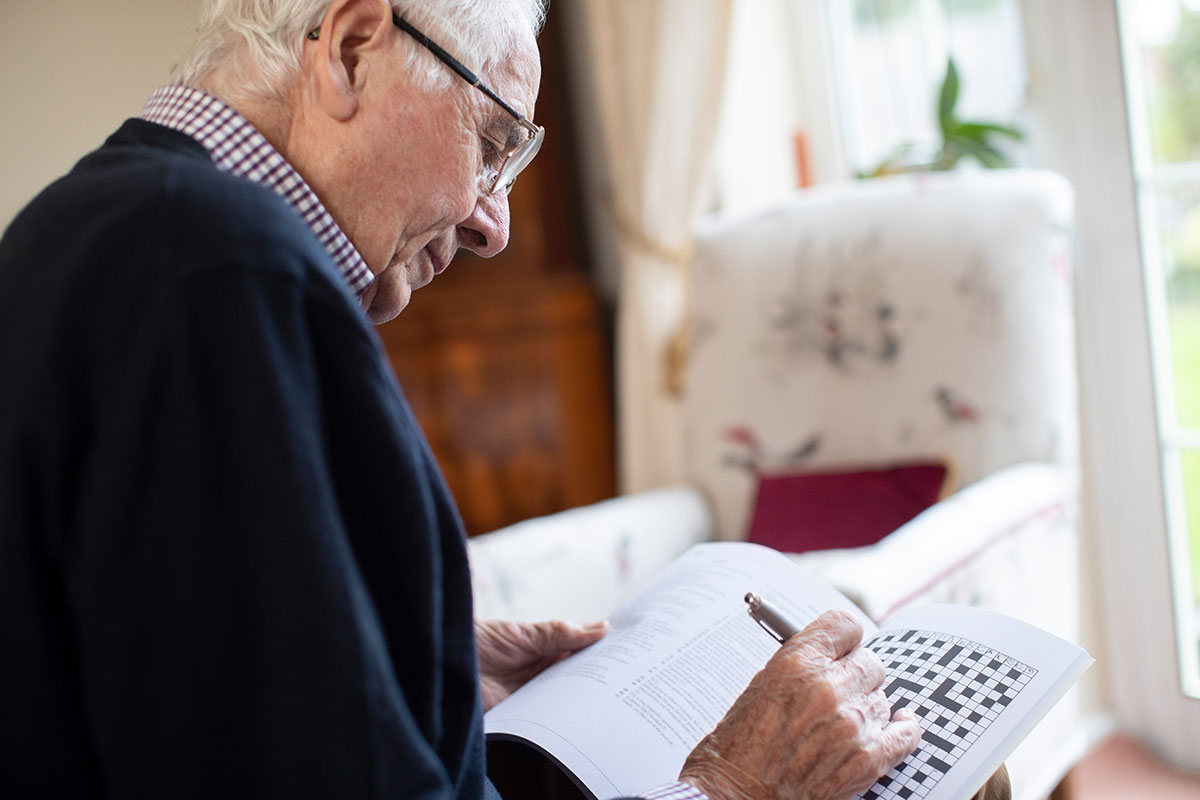
To keep your brain in tip-top shape, use it as much as you can. Taking part in cognitive exercises and performing mental tasks can keep your brain resilient and help you stay sharp. These could include doing logic puzzles and word games. Or it could mean going back to school and taking classes or even learning a new language.
“We’ve had a lot of people who really love to do Wordle and sudoku. A number of residents that I’ve worked with have picked up a Duolingo habit,” Peters says. “I think we often hear: If you aren’t learning, you’re not growing. And in some ways, if you’re not sharpening your skills and using all of those abilities on a routine basis, there is kind of a ‘If you don’t use it, you may lose it’ mentality.”
And while some companies offer specific games or brain-training programs, Hsu says that it’s not necessary to purchase those targeted programs. You can find stimulation anywhere.
“You can do this at any age by challenging your brain and forcing it to learn new things, whether it’s learning a language, a musical instrument, organizing things, planning things, games, puzzles. There’s no one brain activity that’s better than another,” Hsu says.
In some cases, seeking more stimulation also means spending more time socializing. Social isolation is a large risk factor for many health issues, including memory outcomes, that often impacts seniors who spend more time at home.
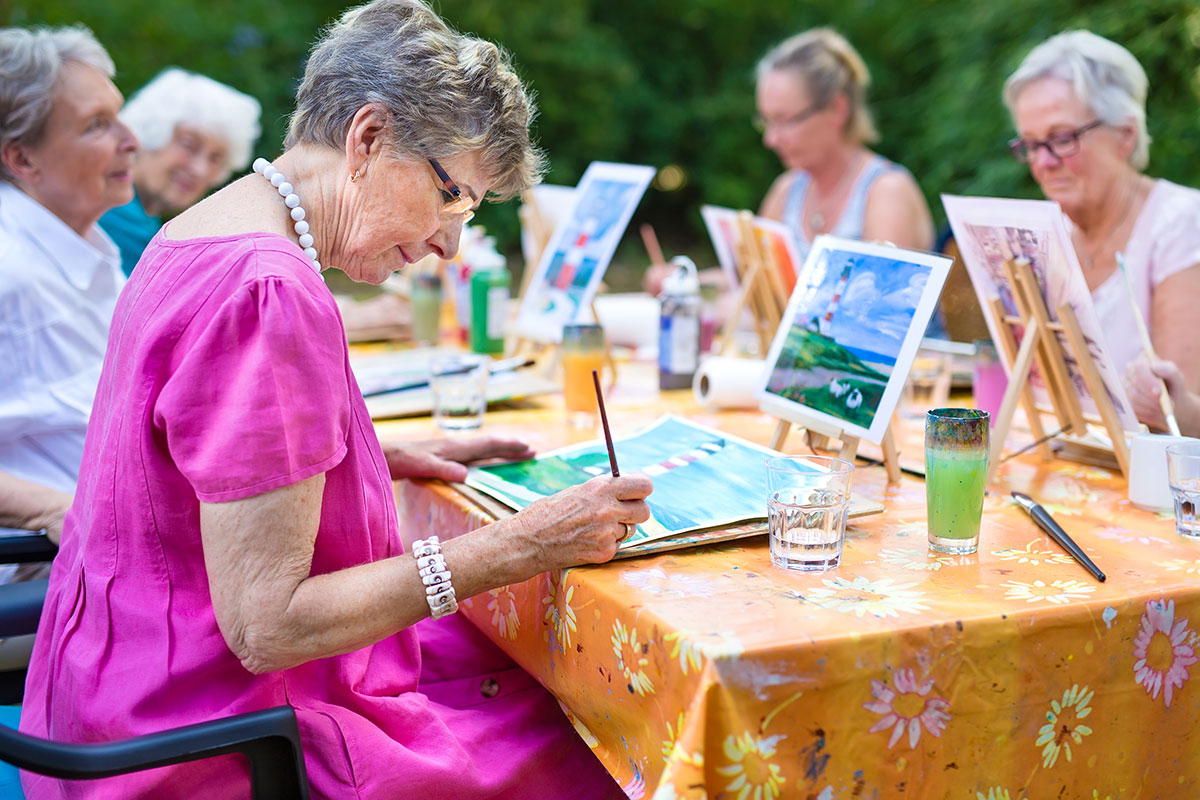
For some older adults, “you really miss out on the ability to engage with people in a social way, which also really does help with … sharpening your mental tools and mental abilities,” Peters says. Group activities like game nights, group fitness, or in-person classes are some ways to double-up on social interaction and brain exercise.
Identify Problems
These habits can help maintain cognitive function and reduce one’s risk of developing dementia later in life. But it’s also important to keep an eye on your mental function and know the difference between normal age-related forgetfulness and dementia.
“We’ll all have some degree of cognitive changes that we consider normal cognitive aging,” Hsu says.
Things like forgetting why you walked into a room, not remembering where you placed something, or having trouble multitasking are all “pretty normal symptoms we’ll hear as people get older,” she says. “They can be really annoying. It can be very noticeable. It can be different than what they’re used to. But it’s not necessarily pathologic.”
But if memory problems are beginning to impact your ability to navigate day-to-day life, it may be time to speak to a professional. Some signs of worsened cognitive decline that may indicate dementia include disorientation while driving, forgetting full conversations, or having trouble managing bills, finances, and medications.
“If you have questions about your memory, if you’re saying ‘How do you know if it’s normal or not?’ you should talk to your doctor and tell them what you’re experiencing,” Hsu says.
Feature image Microgen/stock.adobe.com
This story originally ran in our July Issue. For more stories like this, subscribe to Northern Virginia Magazine.