
Mohammed Loya, MD, is a board-certified interventional radiologist with the Mid-Atlantic Permanente Medical Group. He sees patients at the Kaiser Permanente Caton Hill Medical Center.
Hepatocellular carcinoma, the most common primary liver malignancy, is a major cause of cancer related deaths world-wide. Globally, hepatocellular carcinoma (HCC) ranks as the third leading cause of cancer-related deaths, with approximately 1 million new cases diagnosed each year.
While traditional treatments such as surgery, chemotherapy, and radiation have long been the standard, advances in interventional radiology (IR) are transforming, the way patients receive care, offering minimally invasive options with faster recovery and comparable outcomes.
Understanding Liver Cancer and Its Risk Factors
HCC often develops in patients with chronic liver disease. Historically, hepatitis B and C infections were major contributors, but the landscape is shifting. Epidemiologists predict that by 2040, fatty liver disease, which is driven by having a sedentary lifestyle and rising obesity rates, will become the leading cause of liver cancer in the United States.
Other risk factors include heavy alcohol use and advanced liver cirrhosis. For patients at high risk, regular screening with ultrasound and follow-up imaging such as CT or MRI is critical for early detection.
Once a lesion is identified and confirmed as HCC, treatment decisions involve a multidisciplinary team, including surgical oncologists, gastroenterologists, and, increasingly, interventional radiologists.
Traditional Treatment: Surgery
Surgical resection (removing the diseased liver) has long been considered the gold standard for liver cancer treatment.
However, not all patients are good candidates for this surgery.
Factors such as tumor size, location, liver function, and overall health determine whether surgery is appropriate.
For those unable to undergo surgery, and those who choose against surgery, interventional radiology procedures are often a good solution.
Interventional Radiology: A New Frontier
Interventional radiology has emerged as the fourth pillar of oncology, alongside medical oncology, surgical oncology, and radiation oncology. Procedures performed by interventional radiologists are minimally invasive and performed through small incisions or catheters.
IR procedures often are performed in an outpatient setting, enabling patients to recuperate from the comfort of home.
Two leading interventional radiology techniques for liver cancer are microwave ablation and Y90 radioembolization. As a board-certified interventional radiologist with the Mid-Atlantic Permanente Medical Group/Kaiser Permanente, I have seen firsthand how well patients do after undergoing these procedures.
Microwave Ablation: Precision Heat Therapy
Microwave ablation is generally best for tumors 3 centimeters or smaller. It involves placing one or two needles directly into the tumor under ultrasound or CT guidance. Using thermal energy, the tumor is heated and destroyed. The procedure typically lasts 30 to 60 minutes and requires only moderate sedation. Most patients go home the same day.
Recovery is significantly faster than surgery, usually just a few days of mild soreness or fatigue. Complication risks are low.
Y90 Radioembolization: Targeted Radiation from Within
Y90 radioembolization offers an innovative alternative and is now emerging as first line treatment in some patient scenarios. This technique uses Yttrium-90, a radioactive isotope, delivered via tiny beads into the blood vessels feeding the tumor. Once in place, these tiny particles emit radiation that kills cancer cells.
Unlike external radiation therapy, which requires multiple sessions, Y90 is typically a one-and-done procedure, though it involves two steps. On day one, physicians perform a mapping study to chart blood flow and calculate a personalized dose. On day two (which could be scheduled for a week or so after the mapping study), the treatment is administered.
Most patients return home the same day, and follow-up imaging at one and three months evaluates whether the procedure was effective.
Y90 is gaining traction as a primary treatment modality at many centers because it avoids the risks associated with needle placement and can treat larger tumors. It also minimizes pain and bleeding compared to surgical or ablative approaches.
Comparing Outcomes
Both microwave ablation and Y90 radioembolization deliver results comparable to surgical resection in terms of treating liver cancer. The non-surgical interventional radiology procedures offer added benefits, including:
- Faster recovery: Many patients resume normal activities within a week.
- Lower complication risk: Reduced bleeding and infection compared to open surgery.
- Minimally invasive approach: No large incisions, shorter hospital stays.
These advantages make interventional radiology procedures particularly appealing for patients who are not surgical candidates or prefer less invasive options.
The Future of Liver Cancer Treatment
As liver cancer cases rise, interventional radiology is playing an increasingly vital role. At Kaiser Permanente, these advanced treatments are available at the Caton Hill Medical Center in Virginia and the South Baltimore Medical Center in Maryland.
While surgery remains essential for certain patients, the growth of IR reflects a broader trend toward personalized, less invasive cancer care.
Fortunately, advances in interventional radiology — such as microwave ablation and Y90 radioembolization — are leading to excellent outcomes for patients.
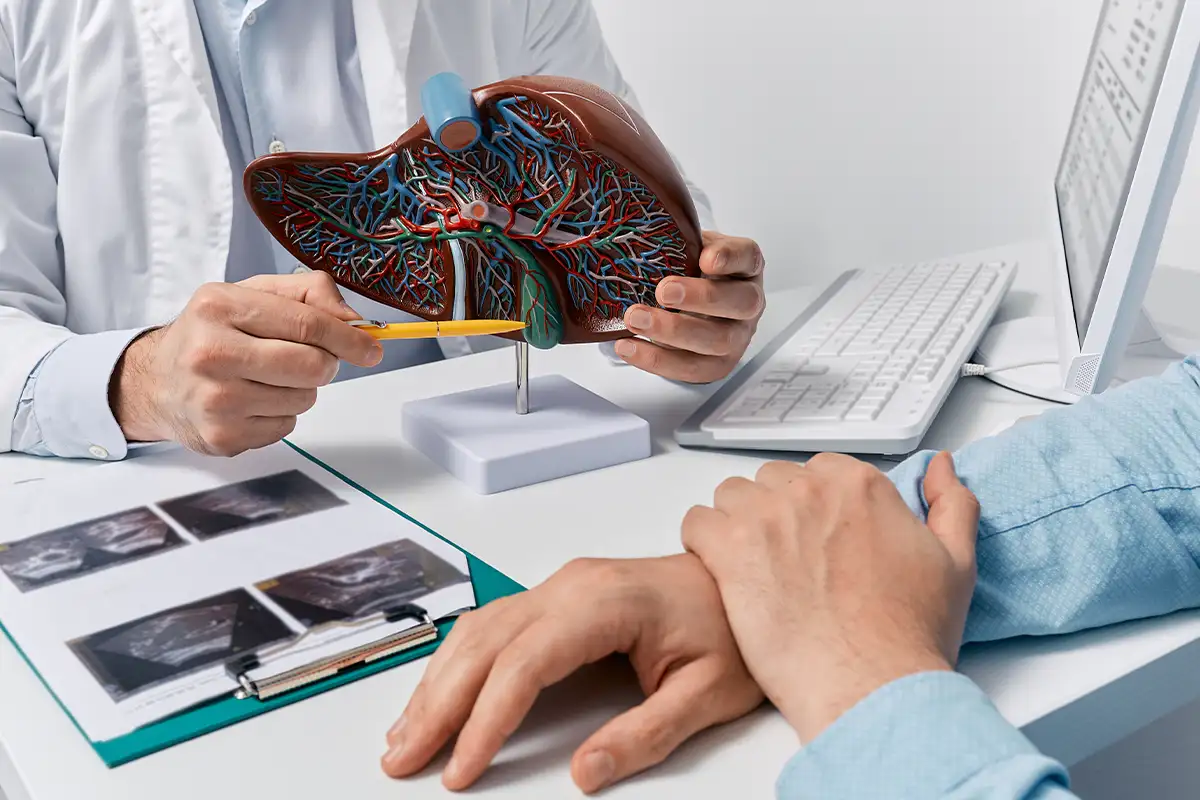
Feature image, stock.adobe.com