
By Gerard Gioia, PhD, director of the Safe Concussion Outcome, Recovery & Education (SCORE) program at Children’s National Hospital.
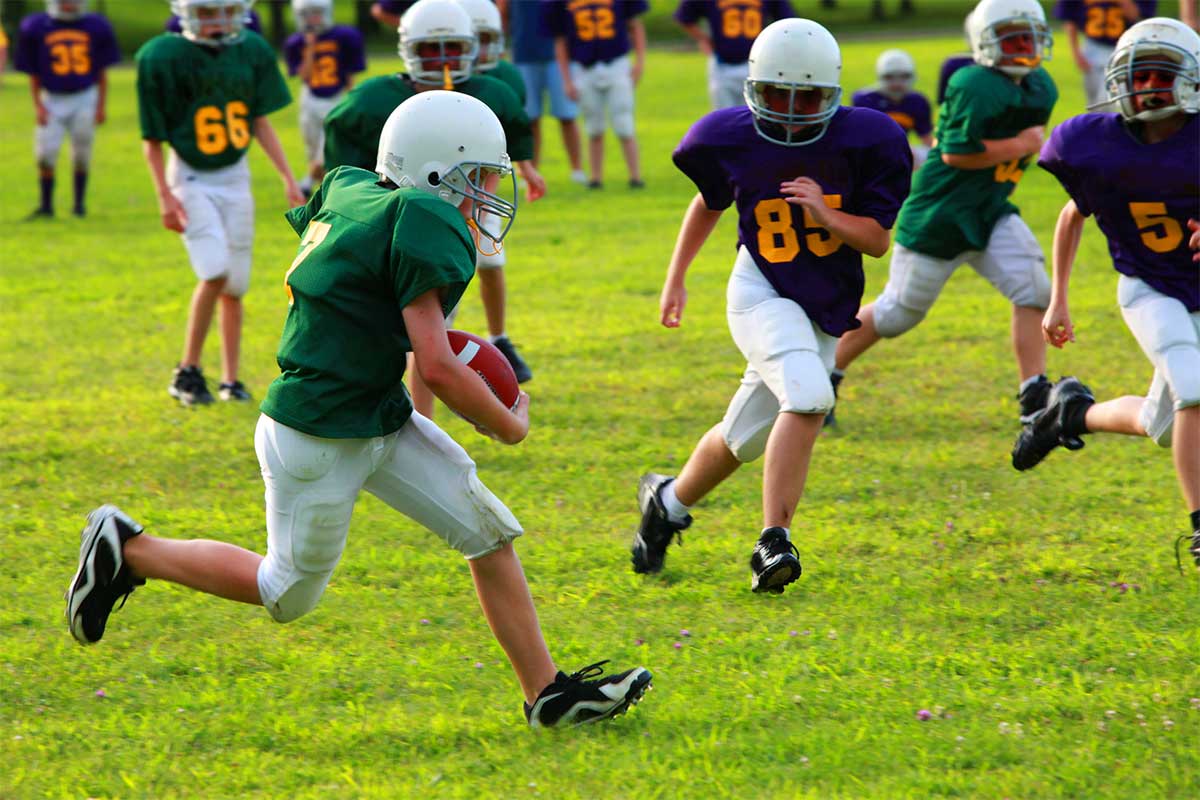
The beginning of the school year for kids and teens means sports and extracurricular activities are back in full swing. For many parents, sports — particularly contact sports — can be a source of anxiety due to the potential for injury, including the often-feared concussion.
Dr. Gerard Gioia, director of the Safe Concussion Outcome, Recovery & Education (SCORE) program at Children’s National Hospital, offers insights into how to help kids stay safe and healthy on and off the field, court, or ice.
What Exactly Is a Concussion?
A concussion occurs when the brain has taken a force that leads to the disruption of its normal electro-chemical function. In other words, it’s a “software injury” that temporarily disrupts how the brain operates.
Debunking Common Concussion Myths
1. Is it safe for kids and teens to play contact sports?
Yes, if taught and played correctly. Safety in sports hinges on proper coaching, good technique and an emphasis on safe play, such as how to execute a tackle in football or a pin in wrestling.
The issue is not about removing all risks because life naturally involves some. Rather, it’s how you manage and educate about those risks that makes a difference.
2. Is there an age that’s considered too young for contact sports?
Not necessarily. Combined cognitive and physical maturity, not age, is a better guide. A lot of organizations like football have said, “Well, we’ll define it by age,” and we say that’s the simple but wrong method.
Every child develops and matures at their own pace. For example, a 10-year-old may have better coordination, understanding of the game and decision-making skills than a taller or older peer.
3. What about baseline testing?
While baseline testing — evaluating an athlete’s cognitive function before a concussion occurs — can be helpful, it’s not practical in youth sports. Some athletes will “sandbag,” or underperform on purpose, to make it easier to get back on the field after a concussion. A trained professional is necessary to understand and manage these issues, and typically youth sports programs lack expert resources and time.
Instead of relying on baseline testing, coaches and parents need to understand how to recognize a suspected concussion. Families should trust the pediatric care systems already available. With trained clinicians, recovery decisions can be tailored to the individual child based on current symptoms and needs.
Identify, Treat, and Prevent
The main goal for kids and their families when dealing with concussion injuries should be to maximize recovery outcomes, which come down to three simple steps:
- Identify early
- Treat properly
- Prevent further injury
While long-term effects of concussions are still being studied, experts believe that with proper treatment and care, children can recover fully. With more awareness of concussions now than ever before, the road to recovery is made much smoother.
Resources and Recommendations
- Use the support available to you: pediatricians, coaches, school staff, and trusted educational resources.
- Ask your child’s sports program important questions:
- Do you follow a national safety protocol?
- Are coaches trained in injury prevention, recognition and response?
- Are medical resources available to assist parents and coaches in identifying potential injuries?
- Take signs and symptoms of concussions and the recovery process seriously.
- Help your child learn and play the game, balancing competition with safety.
Looking for an easy concussion recognition, tracking and educational tool for your active, always-on-the-move child? The SCORE 4 Brain Health app, developed by experts at Children’s National, can be used to identify potential injuries, access educational resources and stay connected with medical guidance all in one place.
Feature image, stock.adobe.com