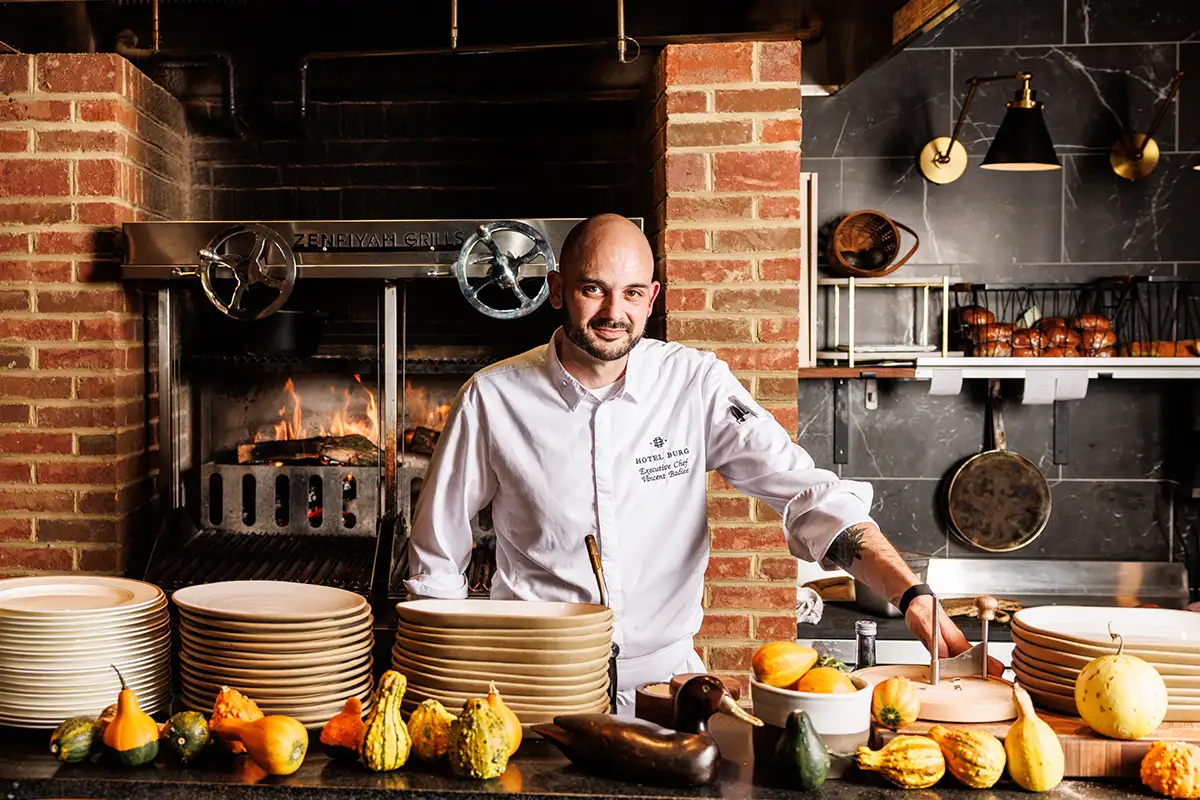
When Vincent Badiee was hired last spring to be chef at Hotel Burg’s signature restaurant, The Huntōn, his imagination took off the moment he saw the dining room. “When I walked through the doors I saw a 1920s grand American dining room — in Paris — very structured. That was my dream, and they just let me go with it,” he recalls.
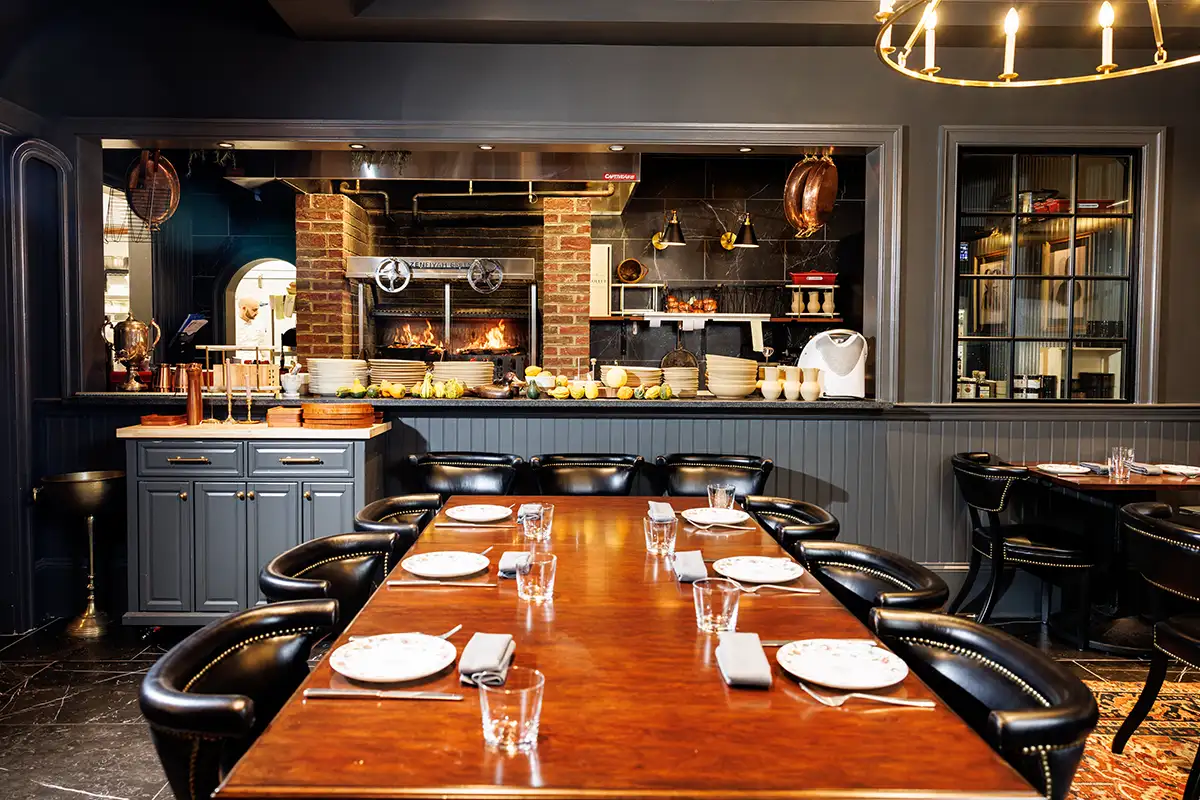
A mighty wood-fired grill was the centerpiece of the kitchen. But Badiee’s dream takes the restaurant to another level. The Restaurant at Patowmack Farm alum wanted a place to grow his own ingredients. Fortunately, the Hotel Burg team had purchased The Manor 1858, an event space on a 22-acre plot of land in Aldie. One hundred apple and pear trees were planted last year, and an olive grove promises to provide the restaurant with its own freshly pressed oil come spring.
The craft continues in the kitchen. Badiee and his team dry age steaks in house. Bakers arrive at 5 a.m. every morning to make fresh bread. He’s even planning a cheese cellar. All this is to say that, while The Huntōn is adjacent to a hotel, it is the real destination, not the other way around.
Delicious Whimsy
The oversized menu dwarfs any diner who holds it, lending it immediate gravity. But the Gatsby-esque affair is far from the staid fine dining it could be. It starts when a guest orders the vegetable crudité plate. Presented in a hand-hewn, orb-like bowl that smokes with the aroma of mushroom and chamomile, it looks like there’s been a mistake and the server has brought vegetables that are still growing. But that soil is made from mushrooms and puffed quinoa. Beneath lies a garlicky Green Goddess bavaroise and a selection of petite roots, still attached to their stems.
This thread of whimsy continues throughout The Huntōn’s every detail. Steak tartare is topped with mustard ice cream. Diners are invited to “choose their weapon” from a knife block before they cut into their melting 45-day dry-aged New York strip. When it’s time to pay the balance, it arrives in a yellow pottery duck. “The bill,” explains a server.
It’s not often enough that a sense of fun is part of a pricey evening out. But it pervades The Huntōn.
A Memorable Menu
That menu reads like a chef’s list of what they’d like to eat — because it is. It’s divided into four categories: larder features preserved ingredients from the chef’s pantry; classics are dishes attributed to everyone from Auguste Escoffier to the woman responsible for the Hummingbird Cake in a 1978 issue of Southern Living; market dishes feature the seasonal harvest; and hunt is focused on wild flora and fauna.
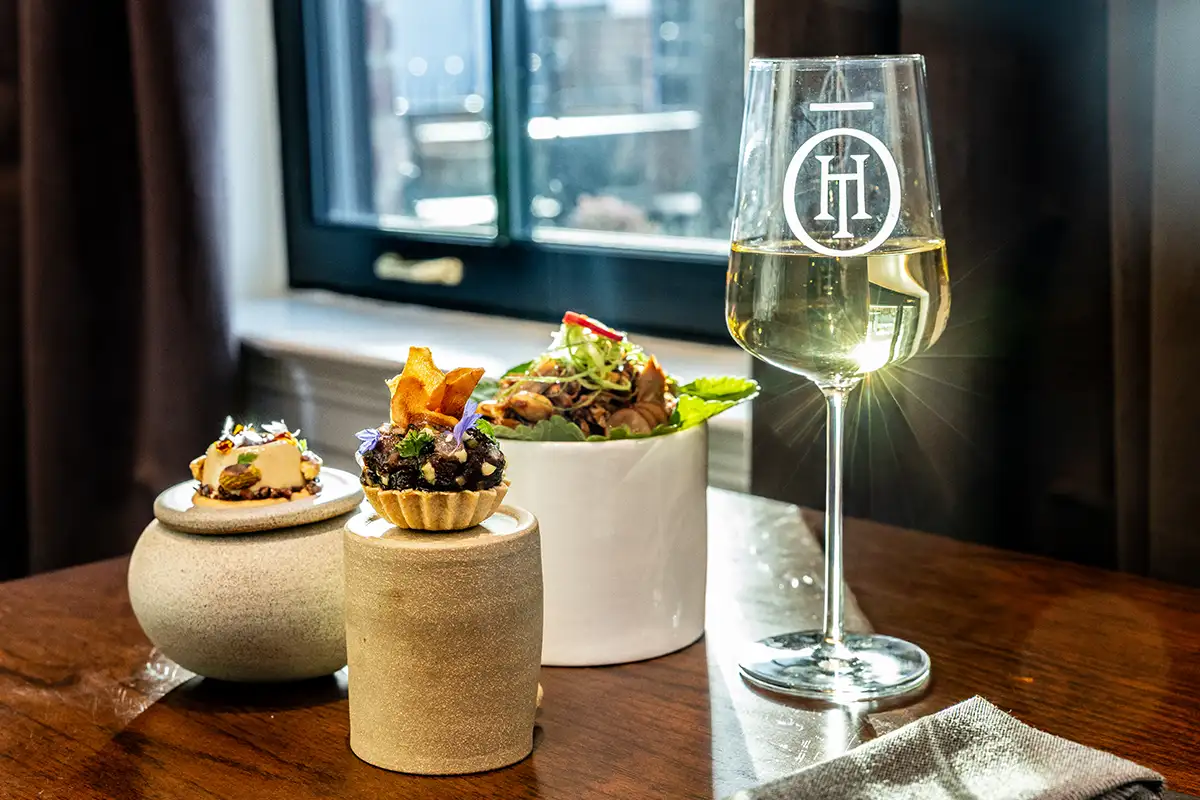
The last of those was my favorite section. Starters include small bites for a low price, such as an Asian-inspired duck confit taco served on a sesame leaf and a venison tartlet flavored with coffee. Foie gras is $12. It’s only two mouthfuls, served over a crumbly pâte sablée with strawberry jam and cacao, taking it just to the edge of dessert, but it’s just enough. The inspiration? As a kid, Badiee’s parents wouldn’t pony up for him to eat foie gras. He wants to make the indulgence a little easier for budding gourmets.
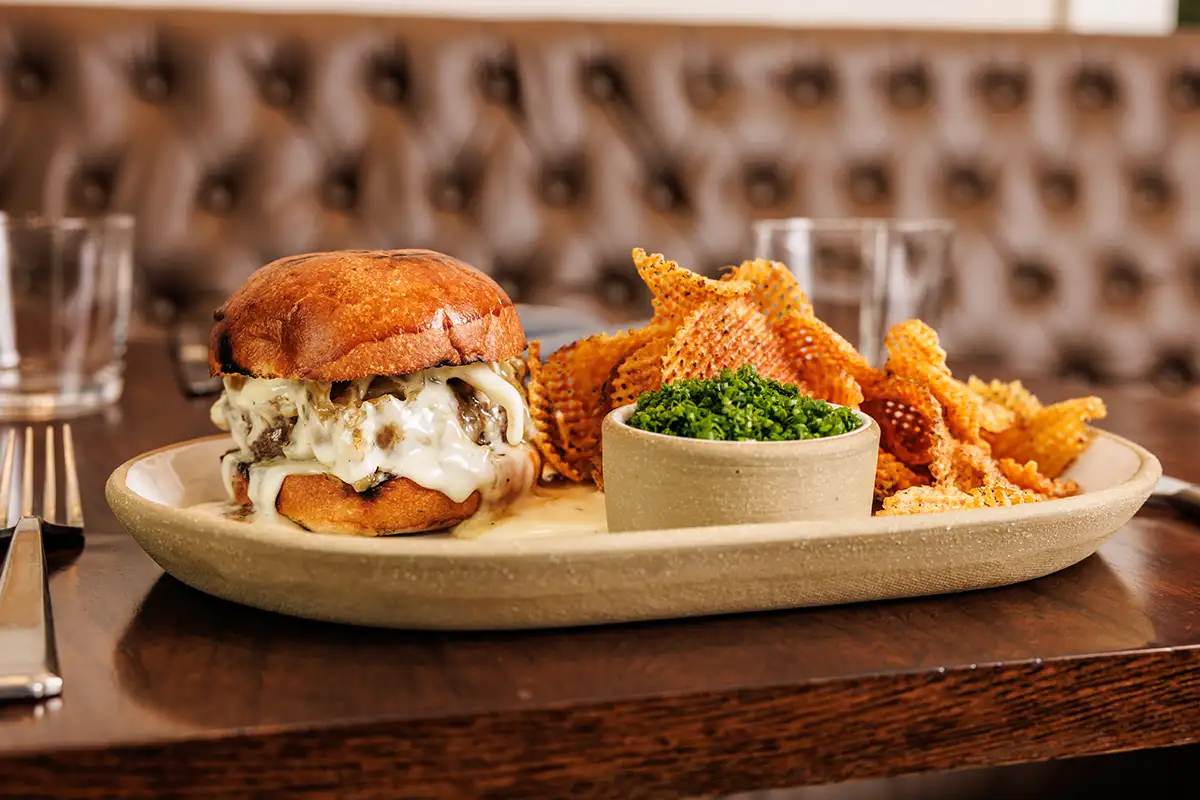
Other dishes are more expensive, but with reason. The enviable Hotel Burg(er) includes 80-day dry-aged rib-eye in its mix, along with brisket, chuck, and short rib from local farms. It’s blanketed in a layer of fontina and served with sweet, caramelized onions on a notably cloudlike house bun with warm pommes gaufrettes, or waffle chips. I would happily pay $28 to eat it any day.
Globally American Fare
This is one of the American standards on the menu, alongside hushpuppies and mushroom grits. But the beauty of today’s American fare is that there are no longer international boundaries. We are all American.
Badiee takes much inspiration from his Persian grandmother with dishes like a mushroom kebab and rainbow trout with sabzi. Diners will be stunned by the burst of flavors in the ash-roasted beets, which combines calming apple tzatziki and candied walnuts with the spicy rattle of zhoug. Think of it as your favorite Cava bowl reimagined by one of the region’s smartest chefs.
Other dishes are even more global. The half Huntōn Chicken is brined for a day, marinated in yogurt, then grilled to-order until the skin is charred and the white meat still juicy. The bird’s feathers are replaced by leaves of cilantro and mint. I accompanied it with basmati rice finished with chicken fat and topped with togarashi and cracklings. I almost lost count of the international influences in that single side.
Badiee is also responsible for the desserts. The highlight among the four is the Black Alaska. This take on Baked Alaska features blackened meringue surrounding anise-redolent absinthe ice cream and a gooey dark chocolate brownie. Like much of the menu, it’s sized for sharing.
Whether you’re digging into “The Game” pie, which combines foie gras, rabbit, venison, and chicken and duck confit with truffles beneath buttery puff pastry or trying old-school Lobster Thermidor, Badiee’s desire is for his food to be a visceral experience. “I want smells in my dining room,” he says.
And there are. Each new sight and aroma of a passing dish serves as a compulsion to return to try more.
There’s nothing stuffy about The Huntōn. Its easy attitude and carefully prepared eats are what the words “fine dining” should signify in a world that’s moving past nouvelle cuisine. The Huntōn is shaping up to be an American classic in its own right.
The Huntōn
Rating: ★★★★½
See This: Imagine a cozy-yet-upscale American hunting lodge through the quirky lens of a Knives Out mystery. Ask for a table looking onto the open kitchen, where the culinary team labors over the wood-fired grill.
Eat This: Ash-roasted beets, Hotel Burg(er), Half Huntōn Chicken, Black Alaska
Appetizers: $10–$28
Entrées: $26–$250
Dessert: $12–$16
Open for dinner Tuesday through Sunday.
208 S. King St., Leesburg
Feature photo by Michael Butcher