Many steak lovers know that the longer beef is aged, the more it takes on a complex funk that some diners might compare to aged cheese. But that’s not the case with dry-aged fish.
“It’s the opposite of when you dry-age meat,” says Chico Dator, executive chef at Modan in Tysons. “You’re removing all the extra moisture. All you taste is the fish and the umami flavor. Fresh tuna is basically chewy; it’s almost crunchy goodness, which I used to like. Now, when I dry-age tuna, or even salmon, it becomes a melt-in-your-mouth texture.”
Before I spoke to Dator, I recognized this to be true when I first tasted his salmon nigiri, part of a varied sushi plate that’s one of five courses on the $125 tasting menu. “This is fish butter,” I remarked to my dining companion. The flavor was milder than most salmon, but it was the cool, slowly vaporizing texture that stood out even more. Atop firm grains of sticky rice, it was a momentous mouthful.
But a visit to Modan is full of those.
The goal of the restaurant, says Dator, a former long-time chef at the Nobu Global restaurant group, is to bring world-class Japanese cuisine to the suburbs. “‘I’m only leaving Nobu to start a restaurant of the same caliber,’” he recalls saying to his wife. “It was the best company I ever worked at, but I thought I had more to offer to this culinary journey.”
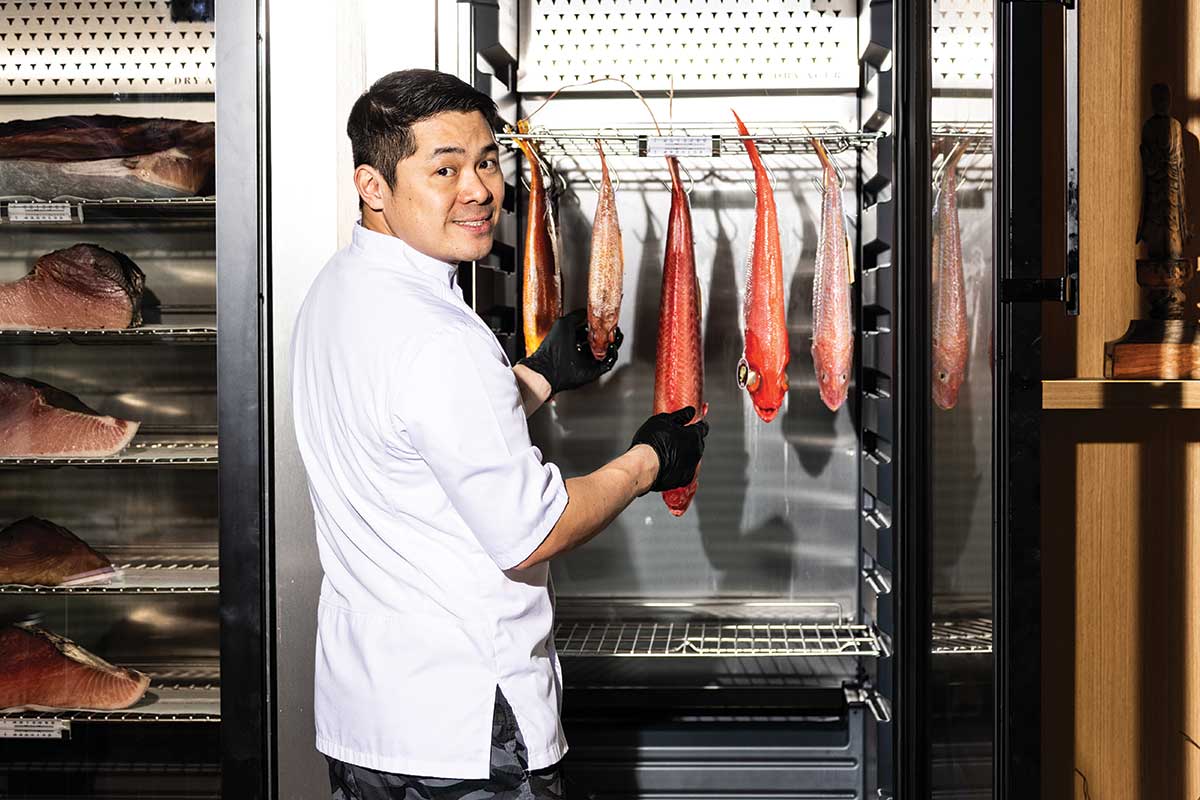
Modan investors include Ray Lee of San Francisco’s omakase restaurant Akikos. A noted pioneer in the realm of dry-aging fish, he taught Los Angeles native Dator the skill, which the executive chef says is still a fun novelty for him. “Any fish that I have on the menu, I hang it in the dry-ager and study. Everything is new learning, even though I have 16 years under my belt,” he says.
Modan’s menu is composed entirely of shareable plates. The best way to enjoy it is with the tasting, which offers the menu’s greatest hits, though there are plentiful dishes worth ordering that aren’t included there.
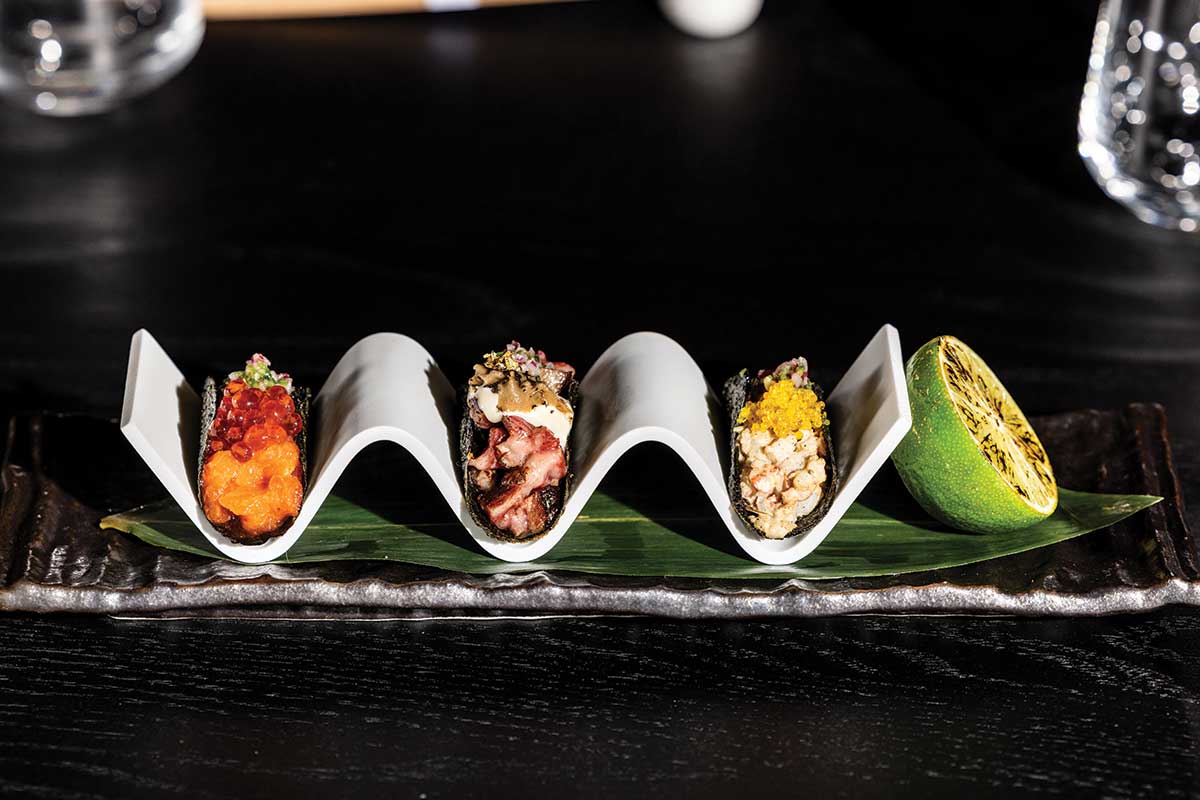
A tasting begins with Dator’s trademark Modan tacos, dry-aged fish or wagyu beef stuffed into crispy nori shells. These are lush bites, but the big surprise is the green salad. The unassuming dish is one Dator says he’s honed for years. On a base of leafy greens dressed in truffled sesame dressing, he layers fried slices of shiitakes that could almost be rashers of bacon. The marriage of salty, tangy, sweet, and umami flavors makes it one of the most memorable salads being served in our region right now.
But fans of his crunchy shiitakes needn’t stop there. Dator says his greatest focus on the menu is the section labeled “Cold Dishes.” Those composed plates of fish with outsized flavor are all worth ordering, but my favorite was the Yellowtail Crispy Shiitake. With tender fish seemingly lit from within by a yuzu miso bath, guacamole lends a creamy, savory lushness to the salty crunch of the mushrooms and bright micro-cilantro on top.
Among other cold dishes, Dator says that the Tuna Crisp, buried in a haystack of fried sweet potato and flavored with tosazu, a fish-infused vinaigrette, is his signature. It’s satisfying but doesn’t stand out like another avatar of the buttery salmon, the King Salmon Carpaccio. Those slices of orange-hued fish are paired with an almost impossibly fine dice of sweet onion salsa. Earthy truffle aioli and acidic yuzu gel compete to make mouths water beneath burnt-umber fried onions.
Though each of the cold dishes is a symphony of flavors and textures, Dator and his team do admirable work with cooked fare as well. Wagyu dumplings, a trio of fried puffs that contain explosively juicy beef, might be pricey at $26, but given the utter decadence of their high-quality filling and dip of truffle aioli, it makes sense.
During my visits to the restaurant, the most expensive items all fell under the “Hot Dishes” category. I was impressed with the crispy skin and rosy surrender of the Umami Chicken between my teeth. The black cod, prepared in house miso and served folded into an oversized leaf, may conjure Dator’s old Nobu stomping grounds to some diners, but his version is less sweet with a fishy kick courtesy of smoked salmon roe on top.
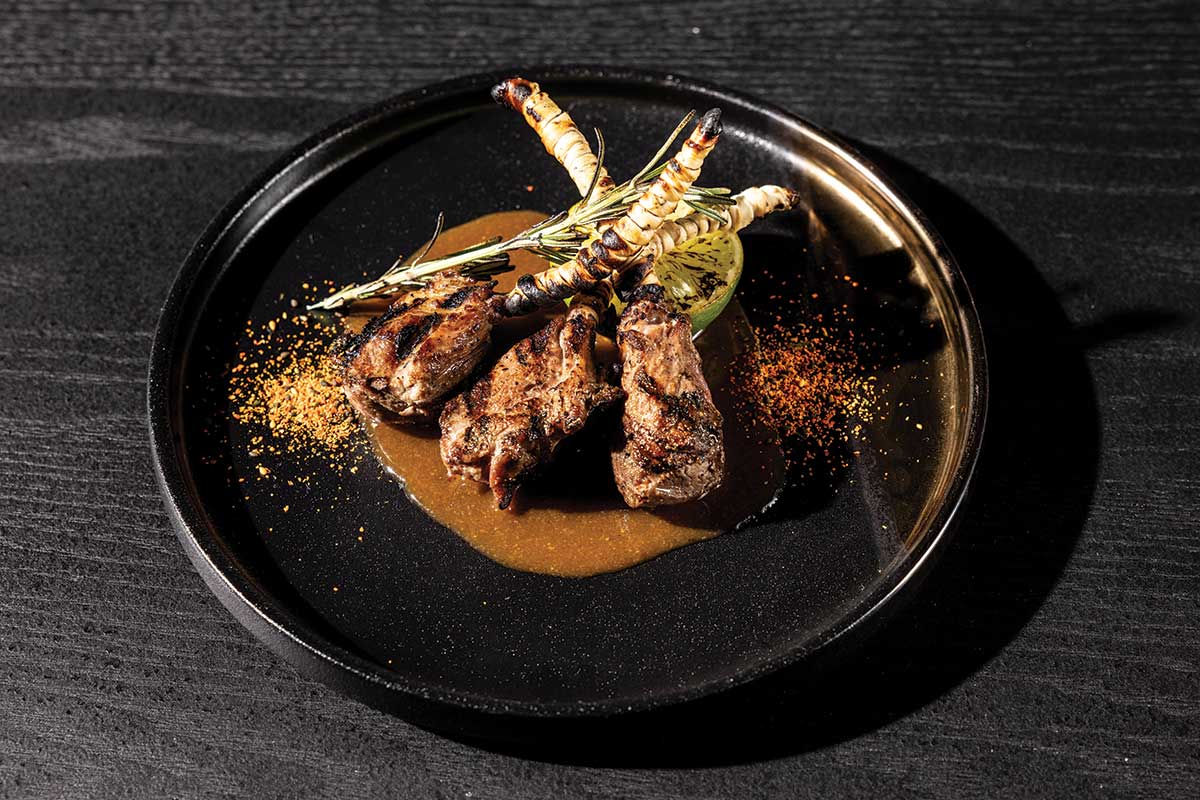
But the hot dish I’ll order again is the lamb chops. Cooked to a medium-rare blush, the flesh slices into tender nothingness atop a sweet-and-spicy miso sauce with a dusting of citrusy togarashi for extra heat.
Desserts, crafted by chef de cuisine Serin Kim, are also worthy of time and money. Given the light portions at Modan, there’s even a chance you’ll have room to spare at the end of a feast.
Passionfruit kakigori comes with a show: A server pours passionfruit and mango syrups onto a cone-shaped pile of shaved ice that truly refreshes the palate. It makes way for the creamy matcha cheesecake, served in a wood box, or, better yet, the chocolate lava cake, which oozes into a scoop of housemade honey gelato.
From reciting complex ingredient lists to pouring those syrups over dessert, service is nearly flawless at Modan. In a region where upscale Japanese food often means either venturing across the bridge or settling, this new addition is an important one. It’s not just that it brings dry-aged sushi to NoVA, it’s also likely to attract reverse commuters to Tysons.
Modan
★★★★ out of 5 stars
See This: In the open kitchen, a harmonious team grabs fish from the nearby dry-agers for unparalleled raw preparations. Grab a seat at the sushi counter for a taste of the omakase.
Eat This: Yellowtail crispy shiitake, wagyu dumpling, lamb chops
Appetizers: $6–$28
Entrées: $16–$160
Dessert: $12–$24
Open daily for dinner.
1788 Chain Bridge Rd., McLean, modanrestaurant.com
Feature image by Michael Butcher
This story originally ran in our February issue. For more stories like this, subscribe to Northern Virginia Magazine.