
By Eleanor Mackey, PhD, child psychologist and director of Mental Health Services in Bariatric Surgery at Children’s National Hospital.
With Thanksgiving around the corner, it’s a great time to teach your kids about gratitude. There are several ways to highlight the importance of thankfulness for impressionable kids and teens, from setting a positive example for your child to directly giving back to the community as a family.
The Basics of Gratitude
Model gratitude through your actions by, for example, saying “thank you” whenever someone does something nice, big or small:
- If someone holds the door for you
- As a server refills your water
- After your child does something you appreciate
Make a point to talk about things others do for us that go unnoticed, like those who collect our trash, deliver our mail or drive city buses.
Start Gratitude-Oriented Traditions
Thanksgiving is a great time to start traditions that make your family stop and think about what they are grateful for. For example, have everyone say something they are thankful for. Or, have your kids draw pictures of or write down what they’re grateful for in a journal. Looking back on these moments can be comforting when they’re feeling down or facing challenges.
You can also incorporate community service into your holiday tradition. Ways to do this include:
- Take some of your Thanksgiving dinner to a friend or neighbor who is ill or unable to make their own dinner.
- Invite someone to join your family for dinner who may not have their own family nearby.
- Volunteer at a local shelter or soup kitchen.
- Pack up gently used toys or clothing to give to kids in need.
Encouraging children to notice and appreciate the positive can strengthen their mental health and build emotional resilience. By emphasizing gratitude, parents help set their kids up for success both in their personal well-being and in supporting the well-being of those around them.
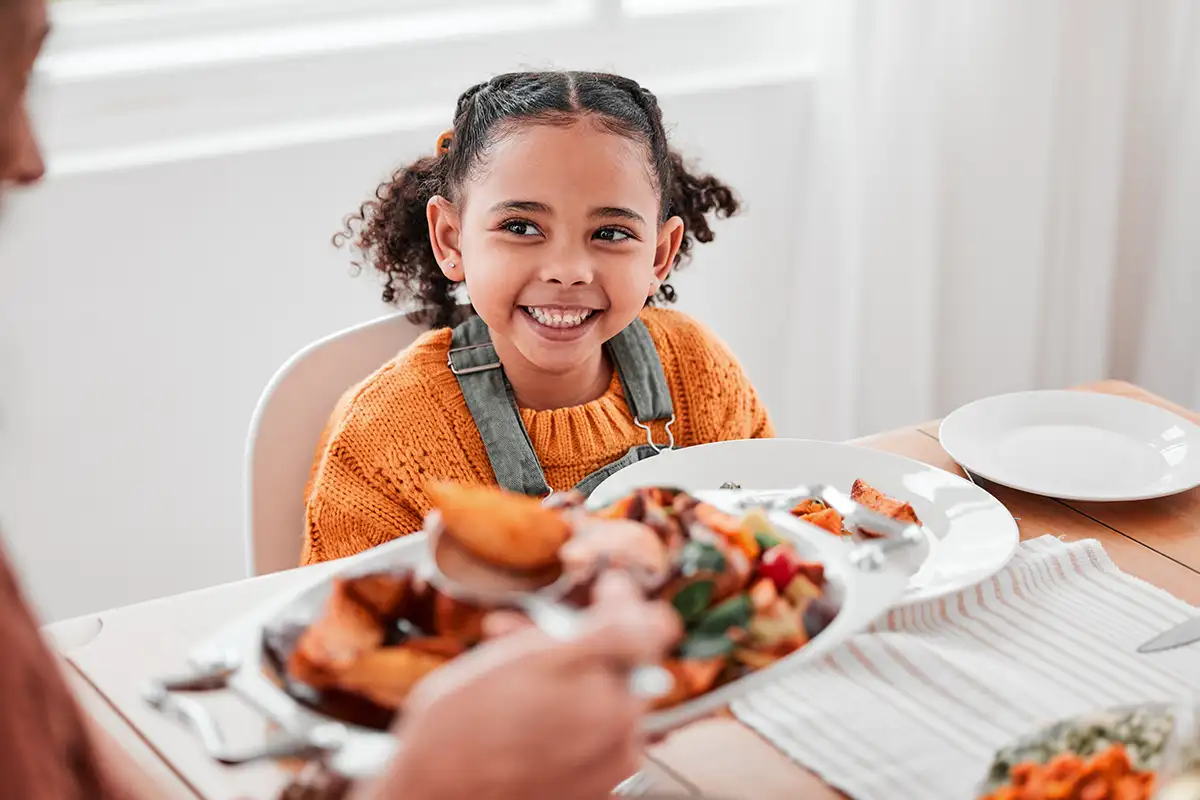
Feature image, stock.adobe.com