
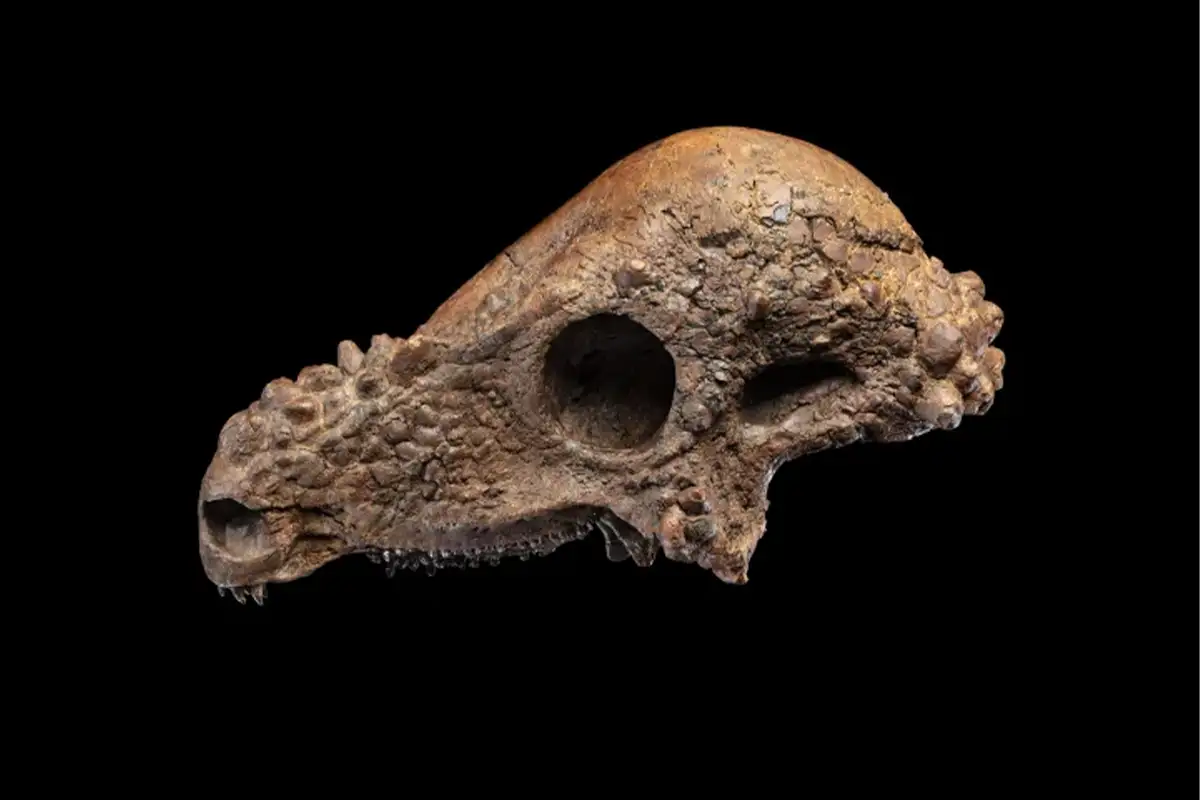
The Smithsonian’s Museum of Natural History in DC has acquired a rare new artifact, a “remarkably complete” skull of a Pachycephalosaurus.
The dinosaur skull will be displayed from December 22 to December 28 at the FossiLab in the Hall of Fossils. It will then “become part of the permanent exhibition in the coming years,” according to the Smithsonian.
The Pachycephalosaurus lived about 67 million years ago alongside Tyrannosaurus rex and Triceratops near the end of the Cretaceous Period. The species is known for its domed head — fittingly, its name means “thick-headed lizard.”
The species and its relatives are poorly understood because of their “fragmentary fossil record,” according to Matthew Carrano, the curator of the Natural History Museum’s Dinosauria. But this skull is almost entirely complete, with 32 different cranial bones and several teeth. Some of the teeth were even still growing within the skull.
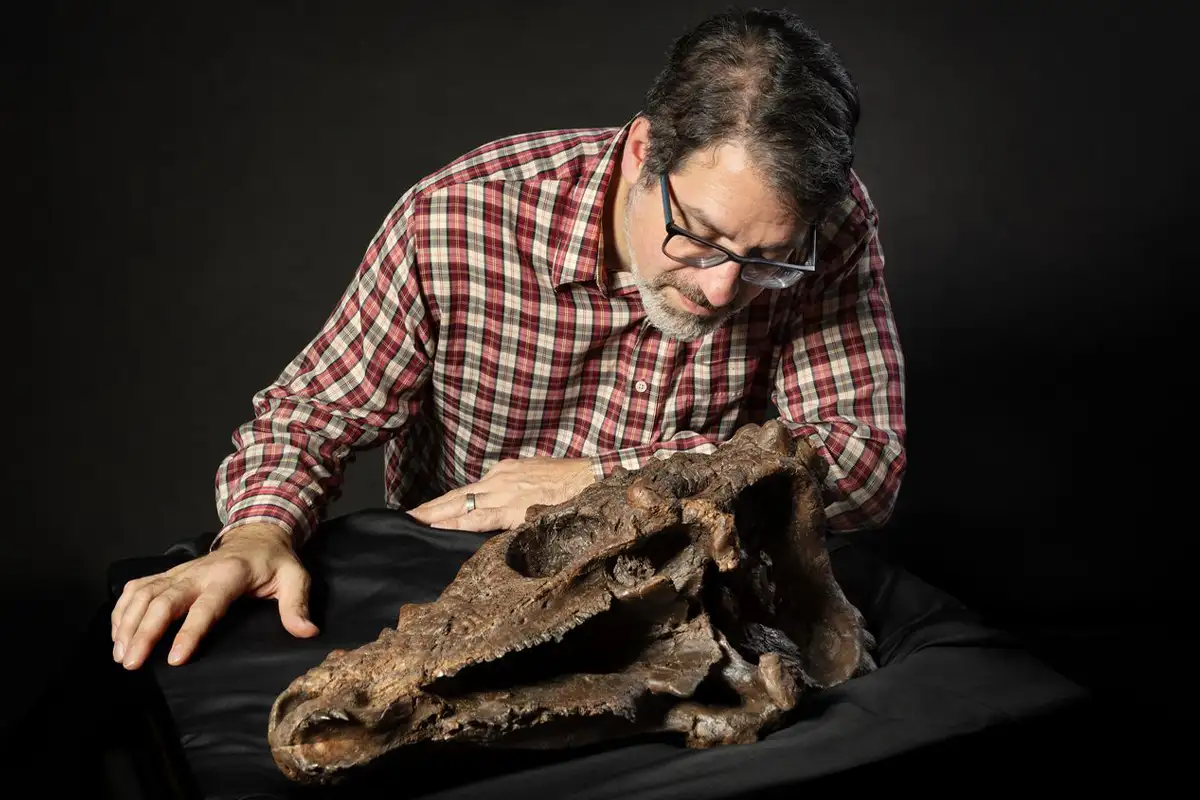
“This skull is by far the most spectacular specimen of this type of dinosaur that we have at the museum,” Carrano said. “We almost never get to see the animal’s face or the teeth or other parts of the head because they usually have broken away.”
This particular dinosaur was likely not fully grown when it died. Carrano says that examining and comparing the skull to others will provide insights into how these dinosaurs changed as they grew.
Researchers found the skull in the Hell Creek Formation in South Dakota in 2024. Eric and Wendy Schmidt purchased it at auction and donated it to the museum, along with an additional donation to support digitization efforts of the National Fossil Collection.
Feature image of Pachycephalosaurus skull by James D. Tiller and Phillip R. Lee, courtesy Smithsonian’s Museum of Natural History