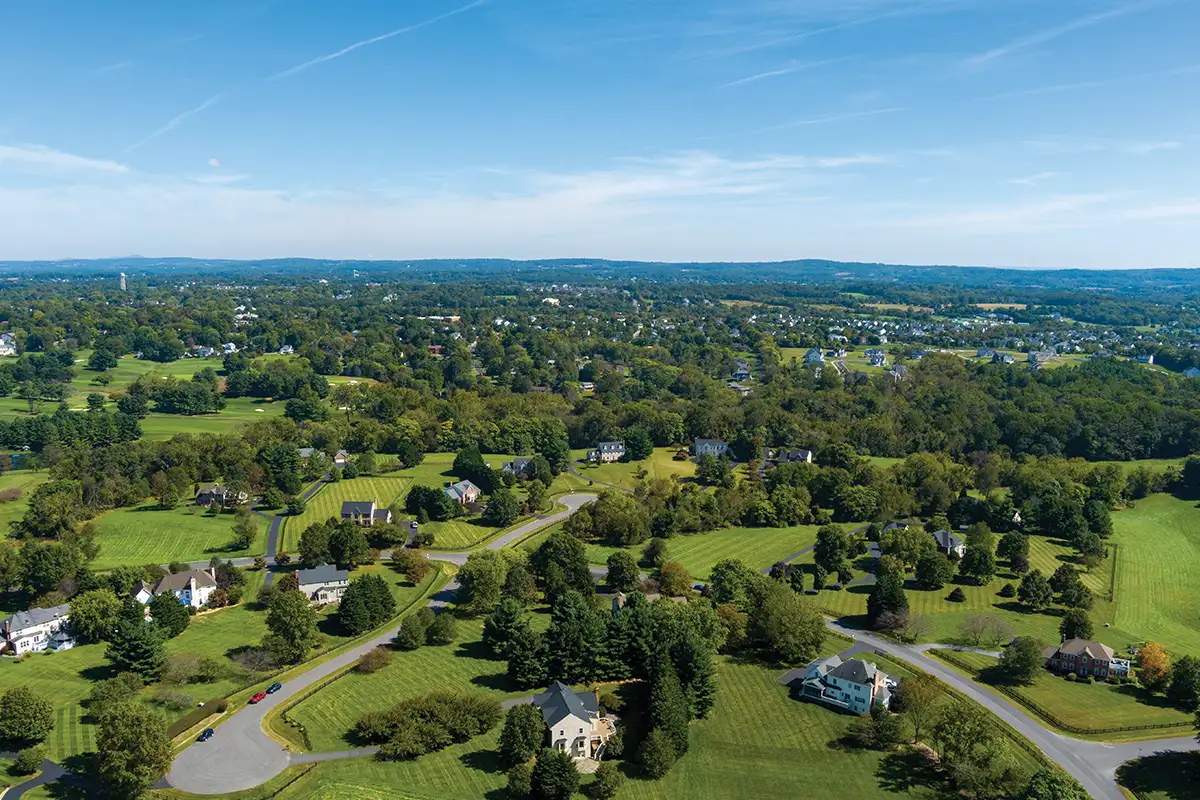
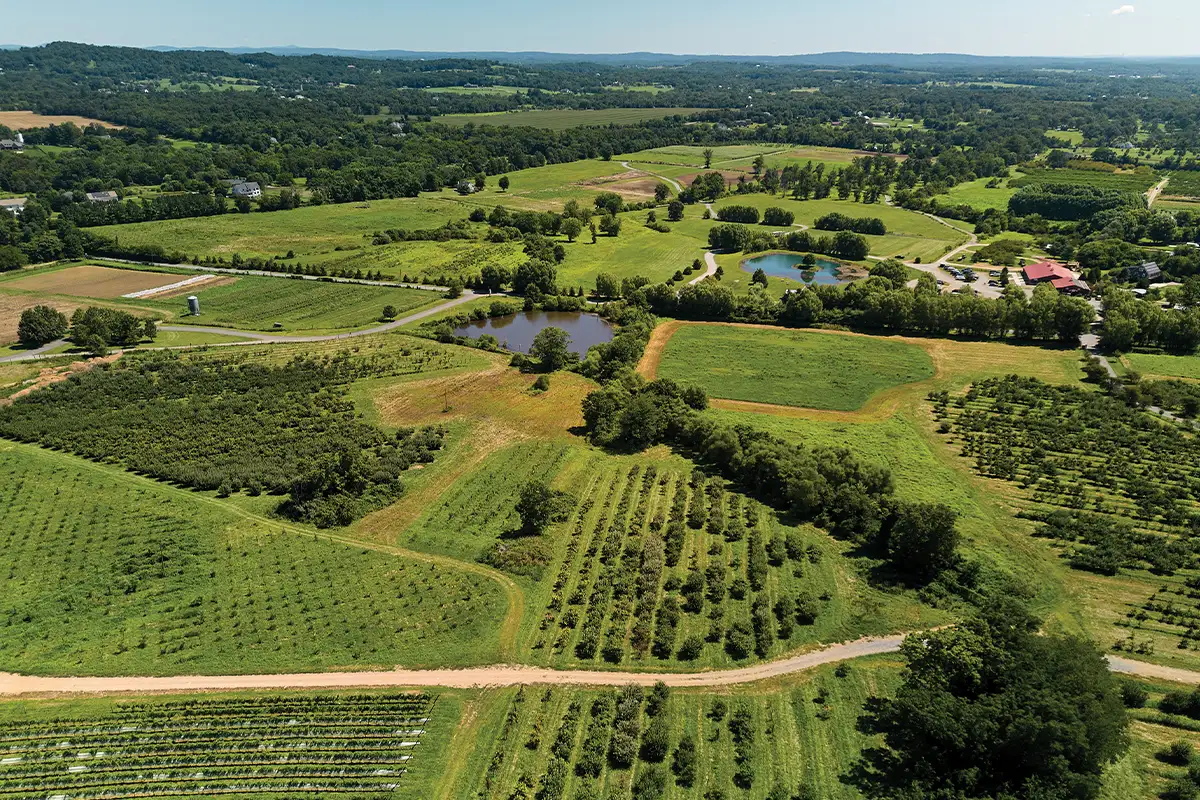
Loudoun County is many things: the data center capital of the world and the nation’s wealthiest county, for example. But “rural” is the quality many residents cherish the most.
Tucked into the foothills of the Blue Ridge Mountains, the 521-square-mile county has long boasted picturesque farmland, wineries, and breweries. But in the past 30 years, the tech industry has bloomed and then boomed there, attracting conglomerates and startups alike.
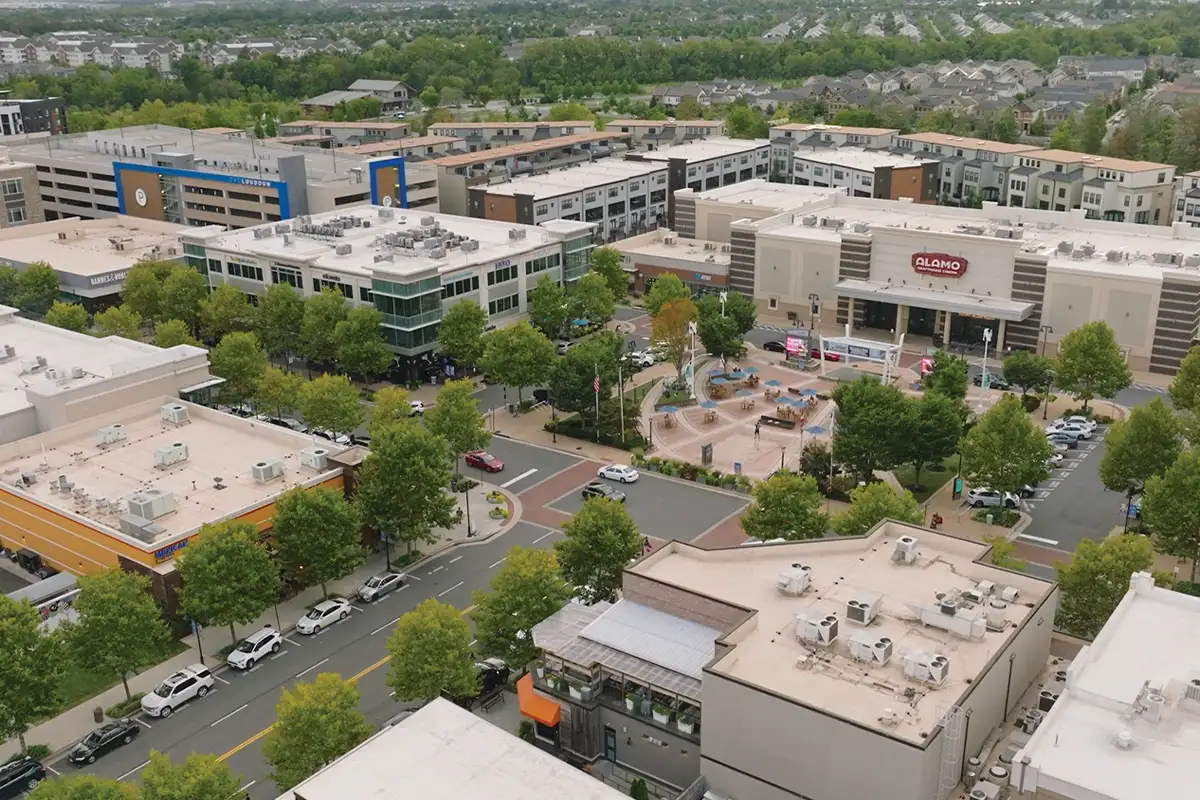
Now known as the Silicon Valley of the East, it’s a study in contrasts, with Metrorail stops and 260 miles of 300-year-old rural roads, some 200 sprawling concrete data centers, and 1,332 farms.
For some residents, the juxtaposition has created friction. Although Loudoun’s commercial development is intentionally confined to the eastern third of the county, locals in the historically bucolic western two-thirds are nervous.
“We’re losing land, we’re losing our natural resources, we’re losing our viewsheds, we’re losing our farms — which is something that’s very near and dear to me — at an unprecedented rate,” says Allen Cochran, a lifelong Loudoun resident and president of the Loudoun Preservation Society (LPS). “You can go 4 miles east of Leesburg and you’re in One Loudoun. You can go 4 miles west of Leesburg and you’re in cornfields and cattle fields. We are literally on a dividing line of development, and it is more important than ever to get serious about it.”
Others see a way to embrace change. “It’s unrealistic to plan for a future where nothing changes,” says Purcellville resident Ryan Ruzic. “If what you want is to preserve the nature and character of western Loudoun, which I do, then I think that you need to have intelligent zoning practices and incentives for people to protect this land.”
What’s Behind the Growth
Several factors contribute to the debate over land use in Loudoun. One is the need to accommodate an exploding population. In 1950, about 21,000 people lived there. Today, 455,000 people call Loudoun home, making it Virginia’s third most populous county. The biggest spike came between 1990 and 2000, when the population almost doubled to 170,000 from 86,000.
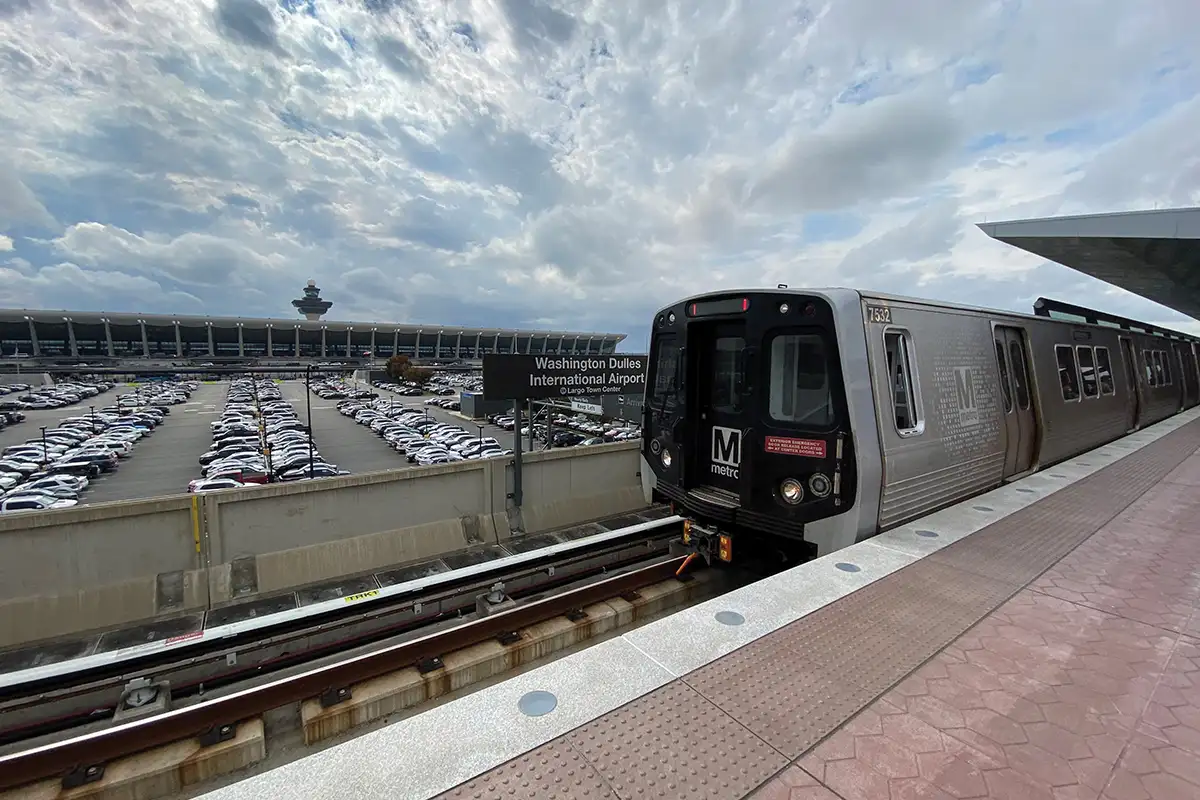
A significant expansion of Washington Dulles International Airport in 1996 brought more jobs to Loudoun, and those workers wanted shorter commutes, leading to residential development. At that time, the Dulles Corridor became “synonymous with growth and future potential for the region,” according to the airport.
The foundation of what would become another moniker — Data Center Alley — was also developing at this time as the internet transitioned from a military tool to a commercial product. In the 1990s, Loudoun became the Metropolitan Area Exchange-East internet exchange point, providing a hub for internet traffic on the East Coast.
America Online moved its headquarters to the county in 1996, employing about 5,300 workers at its height in 2004 and setting up some of the first data centers. Today, Loudoun has 46 million square feet of data centers constructed or permitted, with another 61.5 million square feet available for development.
Stopping the Sprawl
Concerns about Loudoun’s tech triumphs in the east spilling into the western Rural Policy Area (RPA), where commercial development is limited, are at the crux of discussions about how to keep sprawl at bay. Some residents worry about data centers replacing farmland, but “there’s never been any data center construction in western Loudoun,” says Buddy Rizer, executive director for economic development in Loudoun. “There is no plan to, never has been any plan to. … We’ve actually increased the number of farms by 6 percent from 2018 to 2022.”
But people who live there say all those workers have to live somewhere. Between 2003 and 2016, 5,500 new residences were built in Loudoun’s RPA, and another 7,500 will be built there by 2040, according to LPS.
Rural advocates say the Loudoun Board of Supervisors must amend its by-right land use policies, which let property owners build — or allow others to build — homes and even clustered subdivisions without getting a special permit.
“You can’t build that many houses in this area and still call it rural,” says John Ellis, co-founder of Save Rural Loudoun (SRL). “It will not be rural. You’ll have to have bigger roads, you may run out of water, and you’ll lose the scenic value of it.”
Phyllis Randall, chair of the Loudoun County Board of Supervisors, says board members are weighing options that would make such development more difficult.
“When by-right housing is built, you may not have … the infrastructure that’s needed to welcome new homes,” such as roads and water and sewer services, she says. “The more infrastructure we put there, the more by-right housing might come. It’s a chicken-and-egg moment.”
Agritourism may help, she says. For instance, the county has 30-plus bed-and-breakfasts, but they can accommodate only a small number of guests at a time. “We’re starting to see more discussions around event centers, which might have up to 100 events a year with up to 100 people at any event,” Randall says.
There’s potential, but the board needs to first determine performance standards, such as how many events can be held, how late they can go, how loud the music could be, and whether rural roads, which are often gravel, can handle additional traffic. “It’s important that people can monetize their land and at the same time people can enjoy their homes,” Randall says. “It is a balance that we work on every day.”
Rizer says Loudoun’s Economic Development Department and the Loudoun Rural Economic Development Council already have programs that promote agritourism. One is Take Loudoun Home, which puts together spring and fall farm tours. Another is Loudoun, VA Made, Loudoun, VA Grown, which promotes local goods.
“It’s a different kind of economic development,” Rizer says. “It’s really about a more cohesive strategy designed completely to save farmland and to keep western Loudoun with the same sort of feel that it’s always had.”
Ruzic points to conservation easements as a way to preserve rurality. Landowners who voluntarily place their property in an easement give up development rights. Currently, they protect 85,000 acres of Loudoun land.
“You can see [development] in basically real time,” Ruzic says. “I think that has concerned people enough that they’re being proactive about it.”
Ellis says easements work in theory, but they’re voluntary, and fewer landowners have been adopting them. “Having little pockets of protected properties surrounded by development is not really going to get you where you want to go,” Ellis says.
Small Ways to Make a Big Impact
Not all conservation efforts are large-scale. LPS gives grants to Loudouners working on small preservation projects. For instance, in October, it gave out a handful of grants totaling $15,000. One went to Leesburg’s Oatlands Historic House and Gardens to restore a beloved dog statue.
LPS also honors Loudoun’s history through commemorative plaques and markers that denote historic properties.
“Awareness of our little towns and villages and the culture surrounding them was just burned into me,” says Cochran, owner of Cochran’s Stone Masonry in Lincoln, which Quakers settled in the 1720s. “If we don’t start getting really serious about these programs — our historic districts, conservation easements for our farms — we’re going to lose them all.”
Balancing growth and modernization with environmentalism and history is a struggle almost as old as time, and it’s certainly not unique to Loudoun County.
What is unique, however, is having three living settings in one county, Randall says. People can find an urban environment in planned communities like Rivanna at Innovation Station, while folks who prefer suburbia might like Brambleton or Landsdowne. “And then you have the rural area,” she says. “We’re the only county that has these different policy areas that you can live in.”
The success of any one of those areas benefits the whole county, Rizer says. “We all believe in the same thing. That’s protecting western Loudoun.”
Feature image of Loudoun County, MJ Kerr/stock.adobe.com
This story originally ran in our December issue. For more stories like this, subscribe to Northern Virginia Magazine.