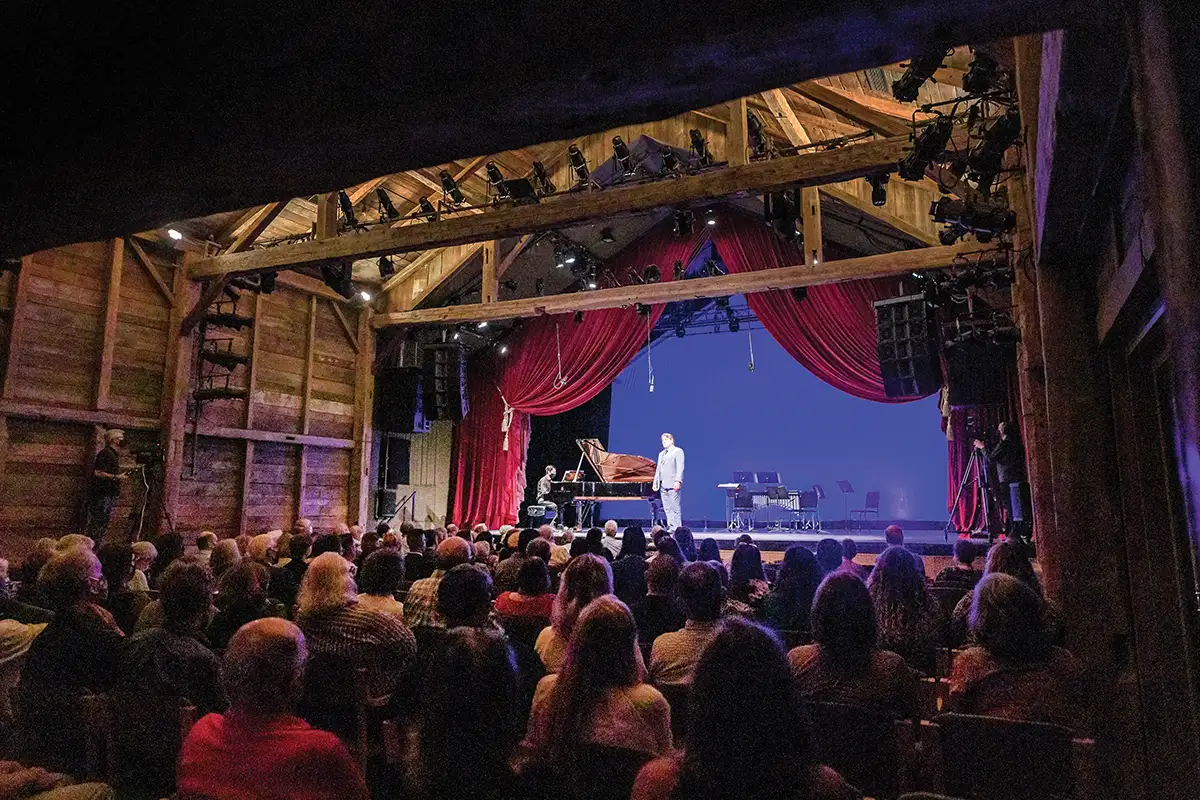
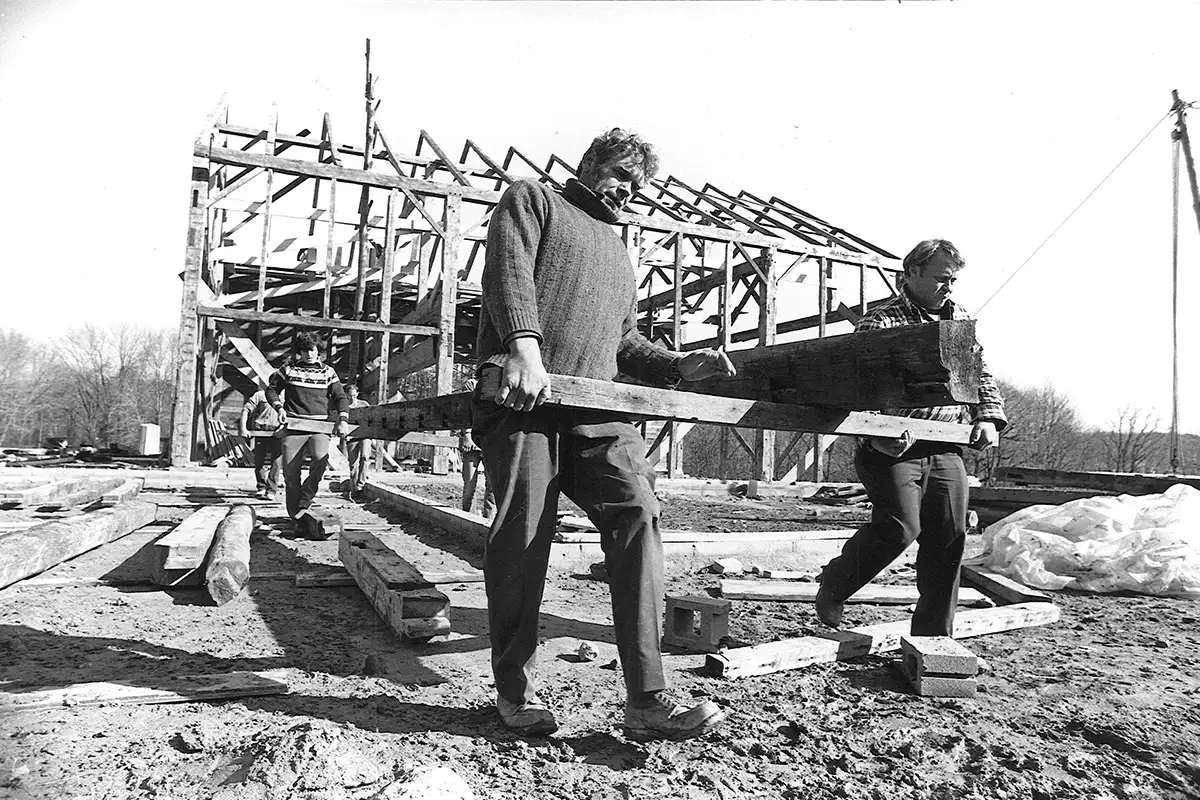
In 1725, when German immigrant Johann Peter Kniskern needed stalls for his seven cows and two horses in Blenheim, New York, he built a barn. Some 255 years later, philanthropist Catherine Filene Shouse, having successfully established Wolf Trap National Park for the Performing Arts in Vienna, was searching for a year-round entertainment hall to complement the outdoor Filene Center. Enamored with the acoustics of the barn at the Surry Arts and Events Center in Maine, Shouse acquired Kniskern’s antique structure.

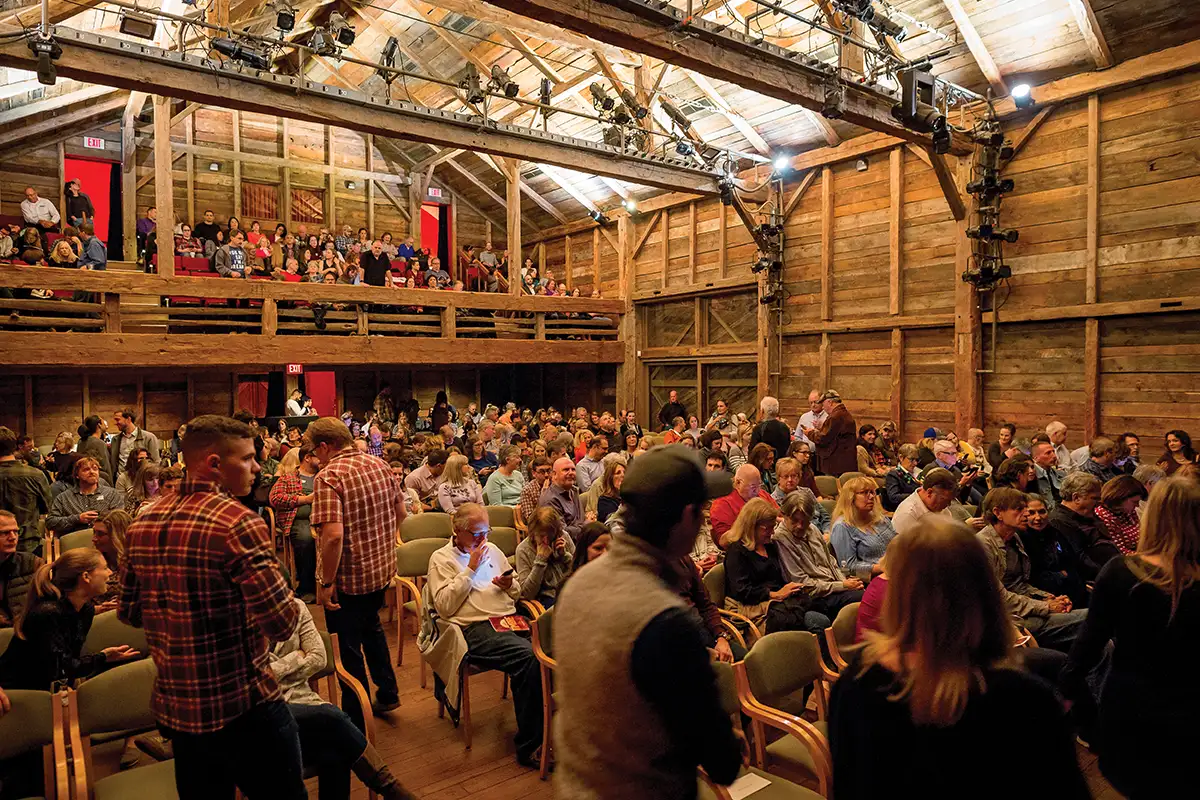
The barn was dismantled, transported nearly 400 miles south, and painstakingly combined with a second barn to create the popular entertainment venue we know as The Barns at Wolf Trap. (The second barn, which serves as the reception area, is called the Scottish Barn because it was crafted in 1791 by a Scotsman in Jackson, New York.)
Last year, Kniskern’s descendants visited Wolf Trap and shared more details about their family and the history of the building. They explained that Kniskern had immigrated from the Palatinate region of what is now Germany, leading the first wave of Palatines to the New World. The British government hired him to harvest supplies for the Royal Navy from New York’s hardwood forests. He eventually settled on 300 acres in Schoharie County.
300 Years Strong
Wolf Trap is commemorating the German Barn’s 300th anniversary with a December 2 gala that includes violinist Gil Shaham and pianist Akira Eguchi performing “Winter” from Vivaldi’s The Four Seasons. “As a point of reference and to put it in perspective, The Four Seasons was published the same year this building was first built,” says Wolf Trap president and CEO Arvind Manocha.
Manocha, who took the reins of the country’s only national park for the performing arts in 2013, delights in telling the vintage venue’s backstory. “Hopefully, people in the region who love Wolf Trap and love coming to concerts will feel just a bit more connected to its history” when they learn of its origins, he says.
Occasionally an artist new to Wolf Trap will compliment Manocha with, “‘Wow, you really made this place look like an old barn,’” he says. “You might assume that when you see so many new buildings that kind of look old or have a theme-park architectural background. And I say to them, ‘This is probably the oldest building you’ve played music in, unless you’ve played in a cathedral in Europe.’”
It’s also most likely the most acoustically sound room they have ever played in, including recording studios. That was Shouse’s intention, says Bob Grimes, who retired in January 2020 after serving as production manager at The Barns for 36 years.
“She was adamant about not altering the interior shape of the barns because she felt it had something to do with the sound,” Grimes says. He recounts that acoustics technicians who were hired to see if any adjustments were possible packed up their gear after a chamber orchestra performance and said, “There’s nothing we can do.”
Hosting Thousands of Acts
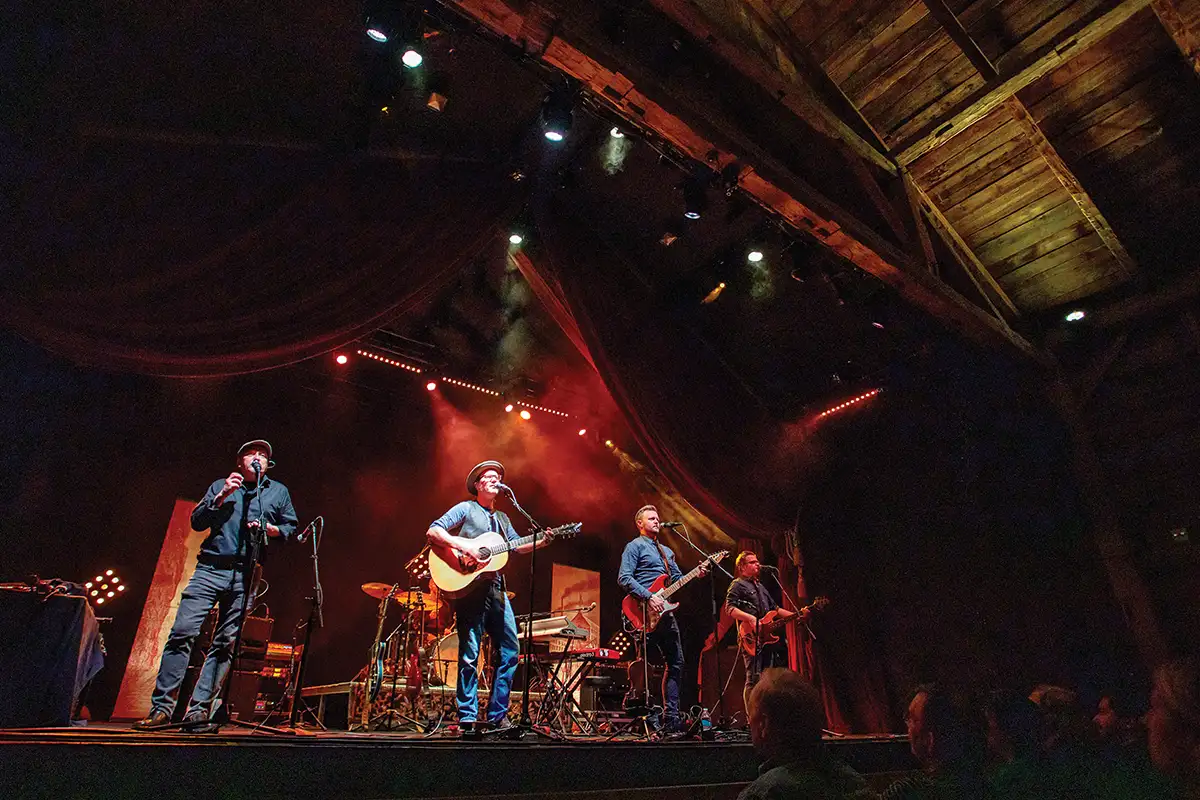
Grimes supervised or had a hand in some 3,600 performances, beginning in September 1983 with Bob Dalsemer and Fiddlestyx in a square dance recital. “I knew immediately it was perfect,” he says. “They were on stage playing completely unmiked and you could hear every single thing happening on stage.”
Over the years, Grimes has seen artists play the 380-seat Barns one year and gain enough popularity to perform in the 7,000-seat Filene Center the next, including Mary Chapin Carpenter, Los Lobos, and David Crosby.
Grimes says he’s seen too many notable acts to name, but a few include jazz double bassist Keter Betts; Grammy-winning singer-songwriter Tom Chapin; folk singer John McCutcheon; jazz guitar virtuoso Charlie Byrd; folk-rock pioneer Art Garfunkel; Grammy winner Taj Mahal; pop maven Ronnie Spector; and Grammy Lifetime Achievement Award–winning guitarist Doc Watson.
When singer-songwriter Nellie McKay was making her Barns debut, “some man wandered up and whispered in my ear, ‘sounds good,’” Grimes says. He turned to see it was Ahmet Ertegun, co-founder and president of Atlantic Records and chairman of the Rock & Roll Hall of Fame.
Another remarkable performance included soprano Wilhelmenia Fernandez, who starred in the 1981 French film Diva. She was all but unknown in the U.S. until, says Grimes, “the movie, for some reason, blew up with American audiences in 1984.” She had been booked before the movie broke big “and she sort of went bigtime. It was the hottest ticket in town,” he says.
The standing-room-only audience fell silent as Fernandez began to sing. “No microphone,” Grimes recalls, still astonished today. “She began with operatic pieces and ended with Negro work songs and gospel, and it was just amazing. I said after, ‘This room can host anything and be magical.’ And over the years, it has.”
Amplifying The Sound
Jazz guitarist Larry Coryell was an early test of The Barns’ sound quality when Grimes compelled him to play acoustic. (Shouse preferred unamplified music.)
“He said, ‘OK, I’ll give it a shot,’ and he played an amazing set,” Grimes says. “He came off the stage and said, ‘You are right, the acoustics are amazing. But next time, you’ll have a sound system. I’m worn out.’”
Grimes eventually did get a sound system. It grew from a humble four-track mixer — allowing a sound engineer to blend four channels into one sound — to a 12-track mixer from RadioShack to a 16-channel board pilfered from the Filene Center before it reopened after a 1982 fire.
For a decade beginning in the early 2000s, the Harman Audio company gifted Wolf Trap state-of-the-art equipment that resulted in a 30,000-watt sound system that Grimes says “is still working great some 20 years later.”
Despite its reputation with artists and fans, The Barns faces increasing competition for ticket sales and marquee bookings as new venues continue to open. But The Barns, Manocha says, offers something no other venue can: “Without The Barns, we’d lack a place where the building itself reflects the same authenticity as the music played inside.”
Feature image of UrbanArias courtesy Wolf Trap
This story originally ran in our November issue. For more stories like this, subscribe to Northern Virginia Magazine.