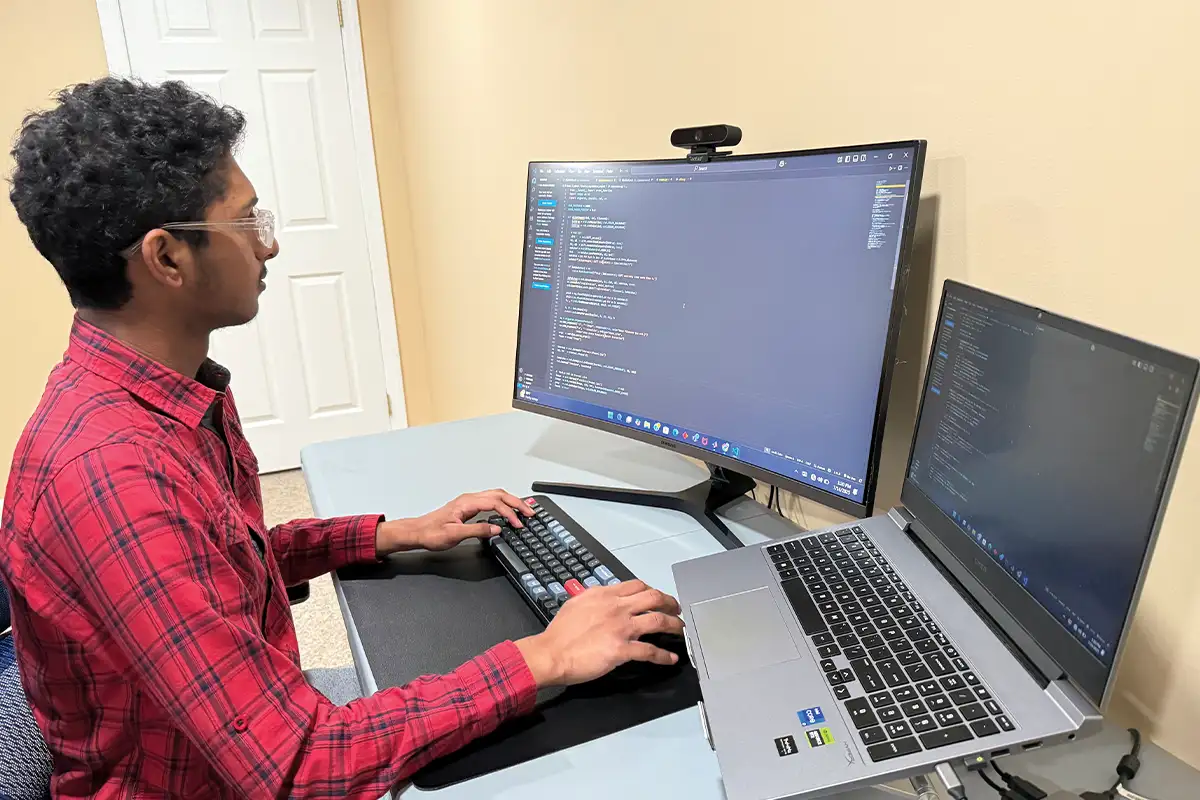
Dhanvin Ganeshkumar recalls seeing his grandparents struggle with computer tasks because of hand tremors. He wanted to help — but the 16-year-old says existing technologies were either expensive or outdated. So, he started coding in his bedroom using a smartphone camera and came up with a tool that allows them to use simple hand gestures and voice commands to control a computer.
“After building out the first version of the product and seeing how the tool actually helped my grandparents navigate their screen more easily for the first time, it really opened my eyes and gave me this moment of realization that the tool could also help the lives of millions of others with motor disabilities, and especially targeted for those in underdeveloped communities who don’t have access to this type of expensive equipment,” Ganeshkumar says. “That’s what really inspired me to start Swype AI with my co-founder, Zoeb Izzi.”
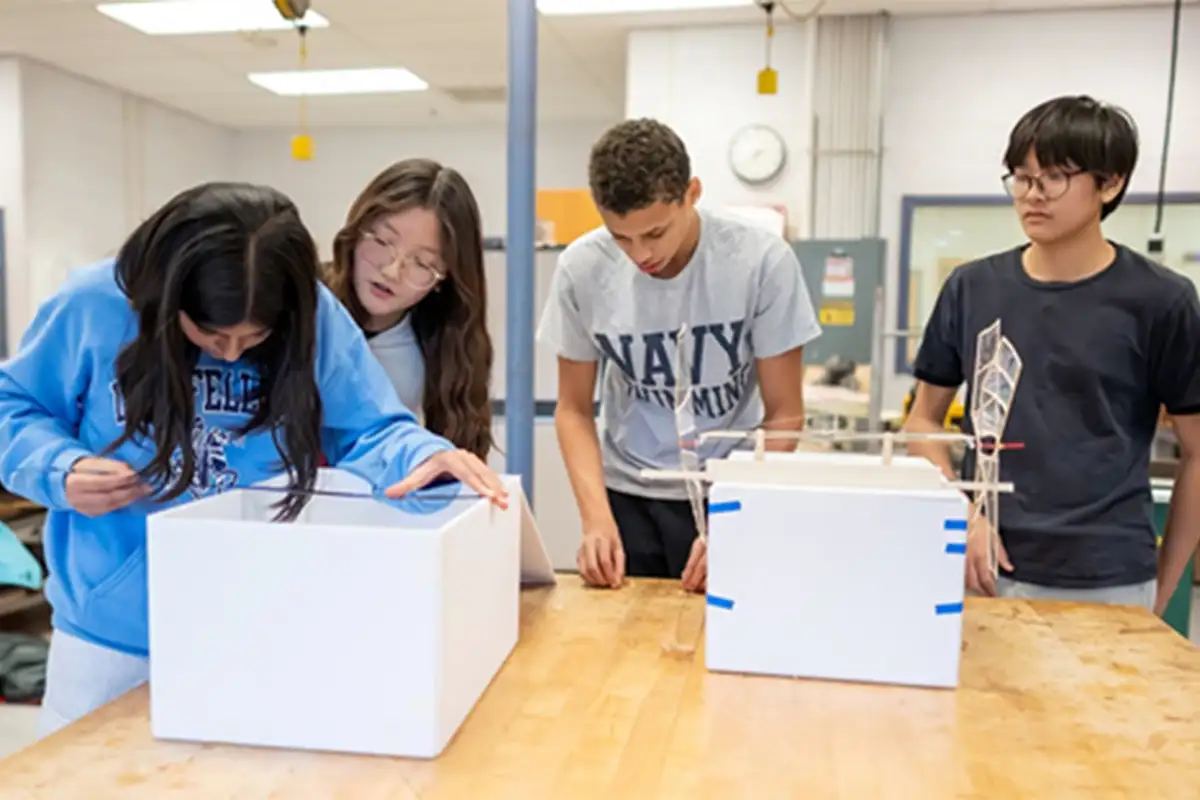
Ganeshkumar, a junior at Thomas Jefferson High School for Science and Technology, and his partner, also a student at the Fairfax County high school, have worked with more than 15 accessibility organizations, including the Parkinson’s Foundation and National MS Society, to refine Swype AI for ALS, cerebral palsy, and other tremor-related impairments. He says he’s been mentored by Jennifer McDonald-Peltier at the Center for Accessible Technology, who has helped guide the approach for Swype AI. “Those insights really pushed us to make Swype AI as flexible and customizable as possible,” he says.
Being a student at TJHSST — rated one of the top high schools in the country — has made a difference for him, he says. Even more than the classes, it has been the “community of people around me, because it’s really inspiring to work with so many smart and accomplished individuals” who motivate him to do his best.
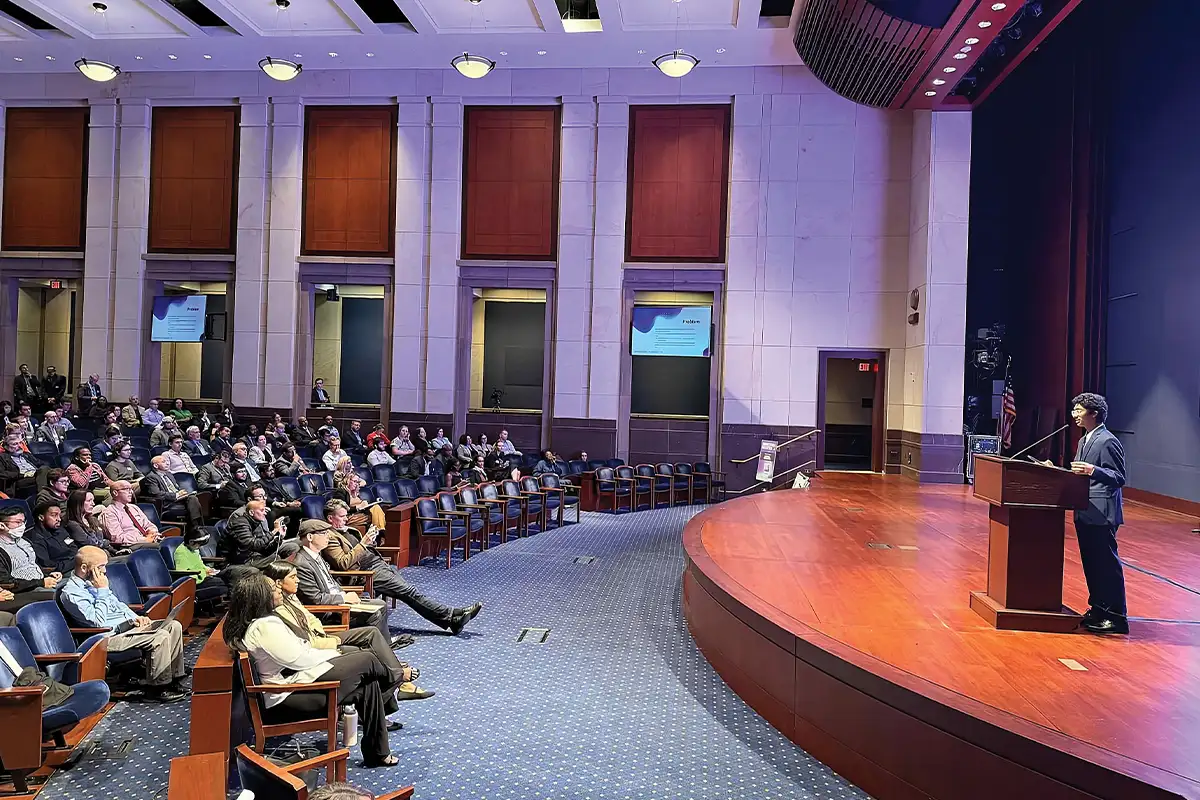
Ganeshkumar calls the progress Swype AI has made “surreal.” He recently presented at prestigious conferences like Harvard Global Health, SXSW EDU, and the MIT Undergraduate Research and Technology Conference. And earlier this fall, he was invited to speak at the Science Summit at the United Nations General Assembly. Swype AI also won $2,500 at the SXSW Student Impact Challenge.
“We are currently working on a new way to use the app where individuals can create their own gesture, so it’s even more personalized,” he says.
Ganeshkumar takes pride in having created a tool that he says is inexpensive and easy to set up. Just a year after working on this technology in his bedroom, Swype AI (swypeai.tech), is now in independent beta testing to improve its hand gesture and voice models, with plans for a wider public release later this year, he says.
Feature image of Dhanvin Ganeshkumar speaking about Swype AI and accessible technology at the U.S. Capitol (Courtesy Dhanvin Ganeshkumar)
This story originally ran in our November issue. For more stories like this, subscribe to Northern Virginia Magazine.