Dr. Jennifer Gourdin is a board-certified family medicine and sports medicine physician. She sees patients at the Kaiser Permanente Silver Spring Medical Center.
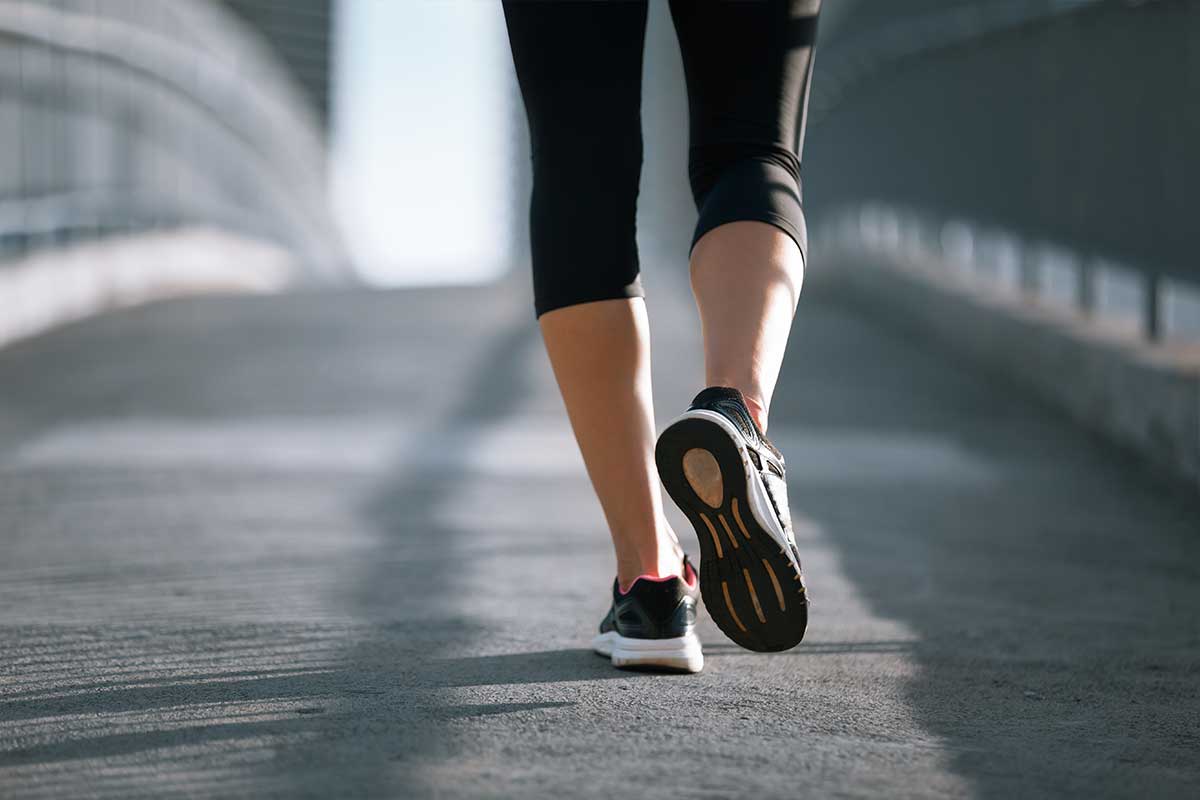
Walking is a great way to benefit your physical and mental well-being — but what about walking backward?
You may be surprised to learn that walking backward has lots of health benefits. By challenging your body in new and distinct ways, you can improve your strength, flexibility, balance, and more. Here are four reasons to consider incorporating backward steps into your exercise routine.
Walking backward improves balance and coordination
Walking backward activates muscle groups differently from walking forward. Studies have shown increased engagement of the quadriceps during reverse walking. Additionally, this movement activates the glute and hamstring muscles. Building strength and flexibility in these muscle groups helps improve balance, coordination, and overall physical health.
Walking backward has also been shown to improve proprioception, or the awareness of the body in space. Proprioception tells us where our body parts are without having to look for them. When you first try a new movement like walking backward, you’ll likely feel awkward and unstable. But by challenging yourself with new movements, you’re improving your overall proprioception, which will help improve balance and coordination over time.
Walking Backward Can Help Your Joints
Studies have shown that walking backward reduces the impact on your joints, specifically your knee joints. The body uses different biomechanics when walking backward. This forces the joints to move in ways they aren’t used to, which can stretch the surrounding muscles and tendons and reduce the impact on your joints.
In fact, a study has shown walking backward can help patients suffering from knee osteoarthritis. Walking backward requires less flexion of the knee and puts less stress on the inside of the knee, which is often the main source of pain for people with knee osteoarthritis. The study participants were asked to walk backward three times a week for 12 weeks. Many participants reported decreased knee pain.
Walking Backward Forces You to be Intention with Your Workout
While going on a walk is a great way to improve cardiovascular fitness, walking can get boring after a while. Walking backward is a great way to stimulate your brain because it requires much more focus and intention. We can mindlessly walk forward, but walking backward requires you to think about each step you take. It is a great way to switch up your workout if you’re feeling bored with your routine.
Walking Backward Can Improve Sports Performance and Prevent Injuries
Athletes of all ages can benefit from walking backward. It helps improve reflexes, agility, balance, and coordination — all important elements of any athletic activity.
Walking backward can also help prevent injuries. We know that walking backward can strengthen new muscle groups, and strong muscles allow for better control of your movements, thereby avoiding awkward motions that can cause a strain or sprain. Strong muscles also provide more stability to the joints.
For example, if you play a sport with a lot of running like soccer or basketball, consider adding backward walking to your fitness regimen. This will keep you active while simultaneously strengthening muscles that aren’t used when you’re running forward. Cross-training is important to build strength in underused muscle groups and allows overused muscles to rest and recuperate.
How to Get Started
I recommend starting on a treadmill at the gym.
Start by putting the safety clip on the back of your shirt. This will turn the treadmill off if you move too far away or accidentally trip. Turn the treadmill on and set it at a slow speed. Hold onto the side rails as you get used to the feeling of walking in reverse. Most research on walking backward had participants walk for around 10 to 20 minutes on the treadmill. If that feels like a long time, start by walking for two to three minutes and working up to 10 minutes. I recommend keeping the incline at zero until you feel comfortable walking on a flat surface.
If you want to take your walk outside, always walk with a partner to help you avoid any potential hazards.
Older adults and people with balance problems, recent injuries, or certain conditions should talk to a doctor before starting a new workout routine.
Anything you do to improve your cardiovascular health — backward walking included — will have plenty of benefits for the whole body. More research is needed to explore the full benefits of walking backward, but the best perk is adding variety to your fitness routine that will challenge both your body and brain. Happy walking!
Feature image, kieferpix/stock.adobe.com
For more expert advice, subscribe to Northern Virginia Magazine’s Wellness newsletter.