
Tick bites are up this season in Northern Virginia and the entire DMV region. And it’s important to know how to protect yourself from tick-borne diseases.
Data from the Centers for Disease Control and Prevention shows that ER visits for tick bites were at their highest level since 2019. And while the numbers generally drop off in July, so far this month is among the worst in recent years.
Tick-Borne Diseases
Ticks are best known for carrying Lyme disease, which can cause fever, headache and muscle pain. If left untreated, it can result in facial palsy, irregular heartbeat, and pain and weakness all over the body.
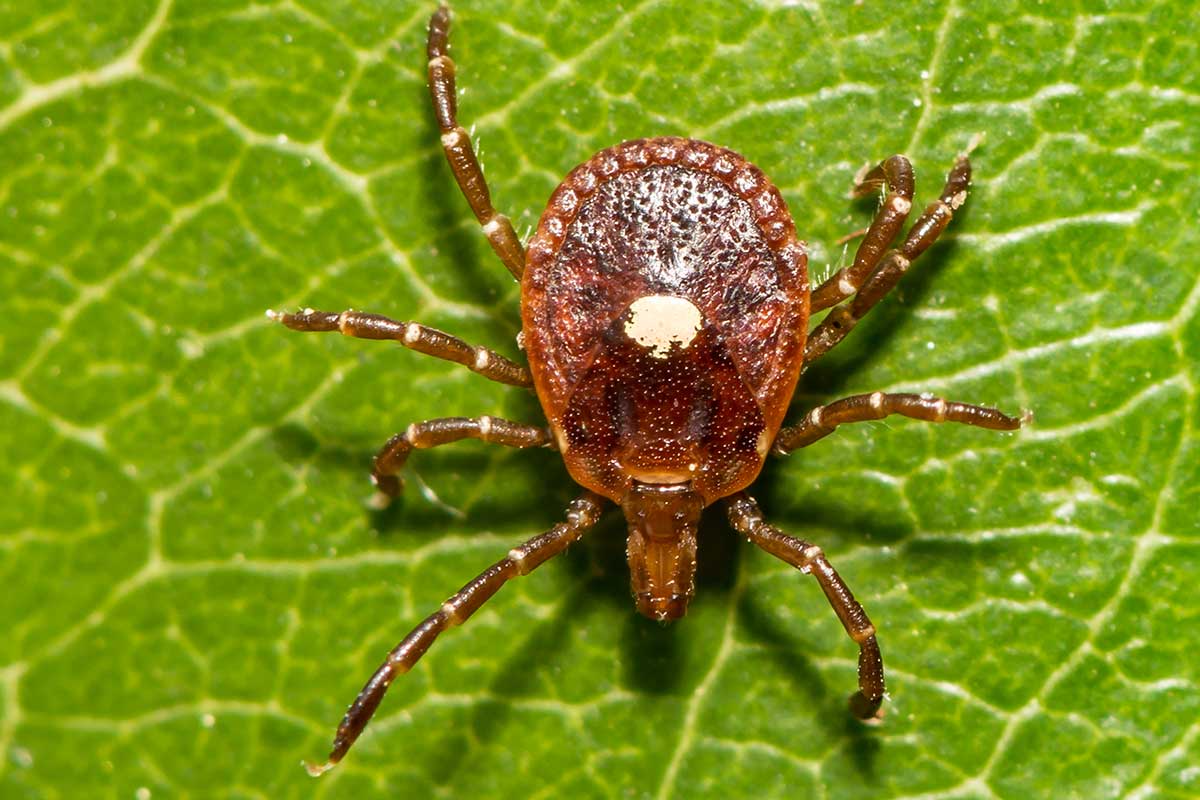
Ticks can also cause anaplasmosis, which can lead to organ failure and even death. And recently they’ve been found to spread Alpha-gal syndrome (AGS), a relatively new and rare condition that leads to an allergy to red meat. The tick that spreads AGS, as well as tularemia and Erlichiosis, is becoming more prevalent in the mid-Atlantic thanks to warmer temperatures from climate change.
Troy Baker D.O., an allergy immunology physician at Kaiser Permanente, started working in allergy medicine in 2009, and says that at that time “[AGS] was barely coming out.” It was so rare, especially in this region, that doctors thought their patients were making it up, or were mistaken. Now, Baker says, “physicians are becoming aware that this is a condition, but I still find patients that tell me that their doctor didn’t believe them that they had this condition.”
Safety Steps
Ticks love to hang out on the tips of grasses, especially in warm, humid weather. So when you go out, stick to the middle of the trail or road.
Wear light-colored clothing (it makes the ticks easier to spot if they get on you). Wear long sleeves (buttoned at the wrists) and long pants (tucked in at the ankles).
Use an insect repellent with DEET; if you want to go natural, use powdered sulfur.
Keep your lawn mowed, and if you’re next to a wooded area, maintain a mowed, or even a gravel, barrier. But don’t call in a lawn service to spray; they’ll wipe everything out, including pollinators your garden needs.
And when you come in, check yourself immediately. “Ticks tend to like to hide in warm, hidden areas of the body,” Baker says. “For example, they love to hide behind the knees, under the arms, around the waist. They can hide in the scalp or hairline and even inside the belly button. Some of them can be as small as a sesame seed, so they can be very easy to miss.”
If You’re Bit by a Tick
To remove the tick, use tweezers to grab it by the head, not by the body. Pull straight up — wiggle the tweezers around if you need to — and the head will come out.
Then, you’ll want to figure out how long it was attached — think about where you might have picked it up — and keep the tick for identification and testing.
If you have been bitten, Baker says, “The most important thing to know is how long the tick was on you.” There are a few tick-borne diseases that spread quickly, Baker says, but most of them take several hours for a disease to develop.
Then it’s a matter of watching for symptoms, Baker adds: “If you start to notice a week or two later that you’re having any kind of unusual fatigue or joint pain, or any kind of neurologic symptoms like memory loss or brain fog, that’s when you really need to contact your doctor.” Tick-borne diseases have a few common symptoms, which Baker describes as “the flu without the respiratory symptoms — so you don’t have the runny nose or the cough and congestion. It’s just the fatigue and the joint aches and just feeling run down.”
The bullseye-shaped rash is the classic visual cue for a tick bite, but that’s not the most common visual cue: Baker says to look for a “two-inch, uniformly red, well-demarcated, circular lesion. It’s kind of like a red, uniform rash with a sharp border around it.”
Feature image courtesy ondreicka/stock.adobe.com