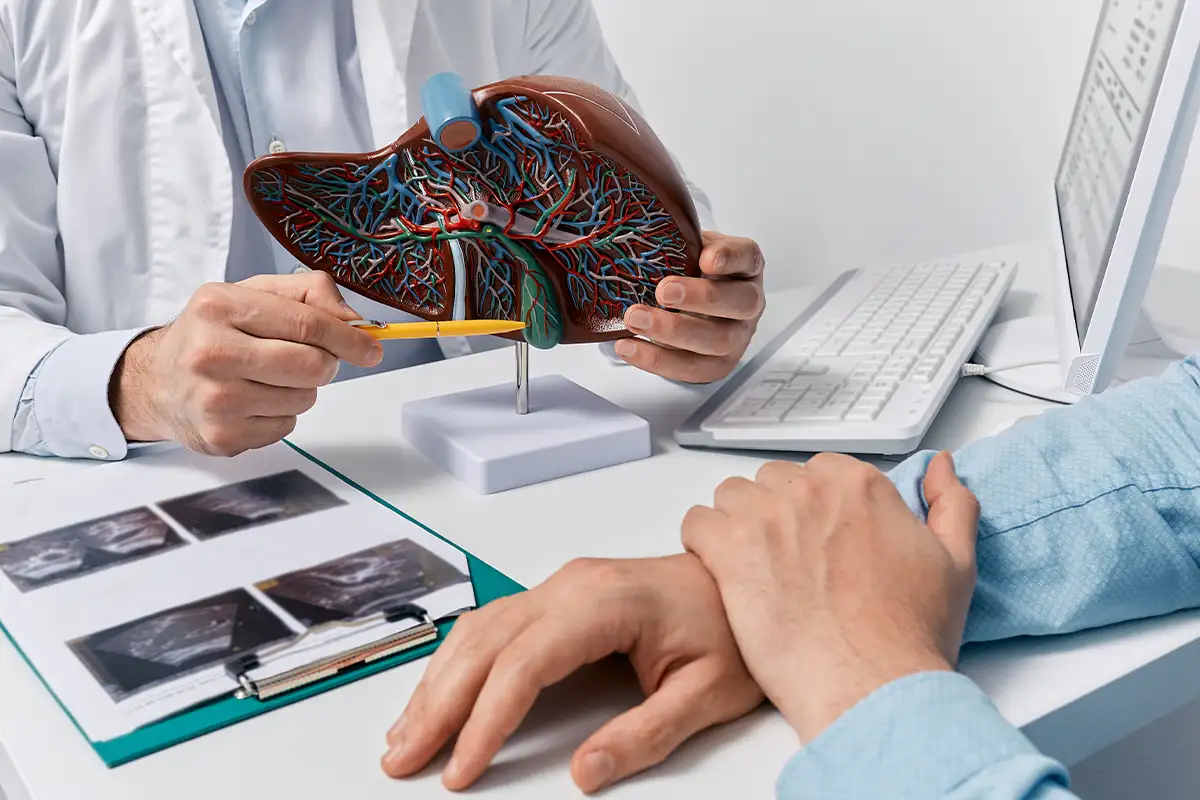
It took less than five minutes of feeling trapped in a flooding home for Li-Mei Chen to know she’d waded into a transformative approach to training caregivers of people with dementia. The scenario was part of a virtual reality solution from Japanese medical VR maker Jolly Good that simulates what people with the degenerative cognitive disorder experience.
The program that Chen viewed reproduced a visual hallucination akin to what someone with Lewy body dementia might have as one of their psychotic symptoms.
“I’m screaming because I’m scared,” says Chen, an assistant professor at George Mason University’s College of Public Health. “I was like, ‘Oh my god, this is what people with dementia are experiencing. How helpful that would be for direct care staff to experience?’”
VR has already proven effective in helping calm people with dementia, but this flips the script to let caregivers see through patients’ eyes.
Using Virtual Reality to Help Care for Dementia Patients
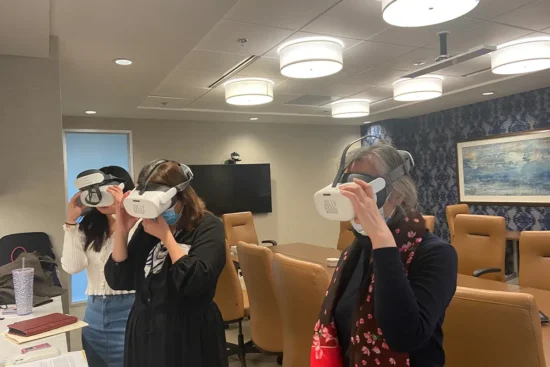
Within a year of trying the technology at an annual meeting of the Gerontological Society of America in 2023, Chen secured grants from GMU and the Geriatric Training and Education Initiative at the Virginia Center of Aging to test her theory that virtual reality can boost empathy among certified nurse nursing assistants (CNAs) who work with dementia patients at assisted living facilities.
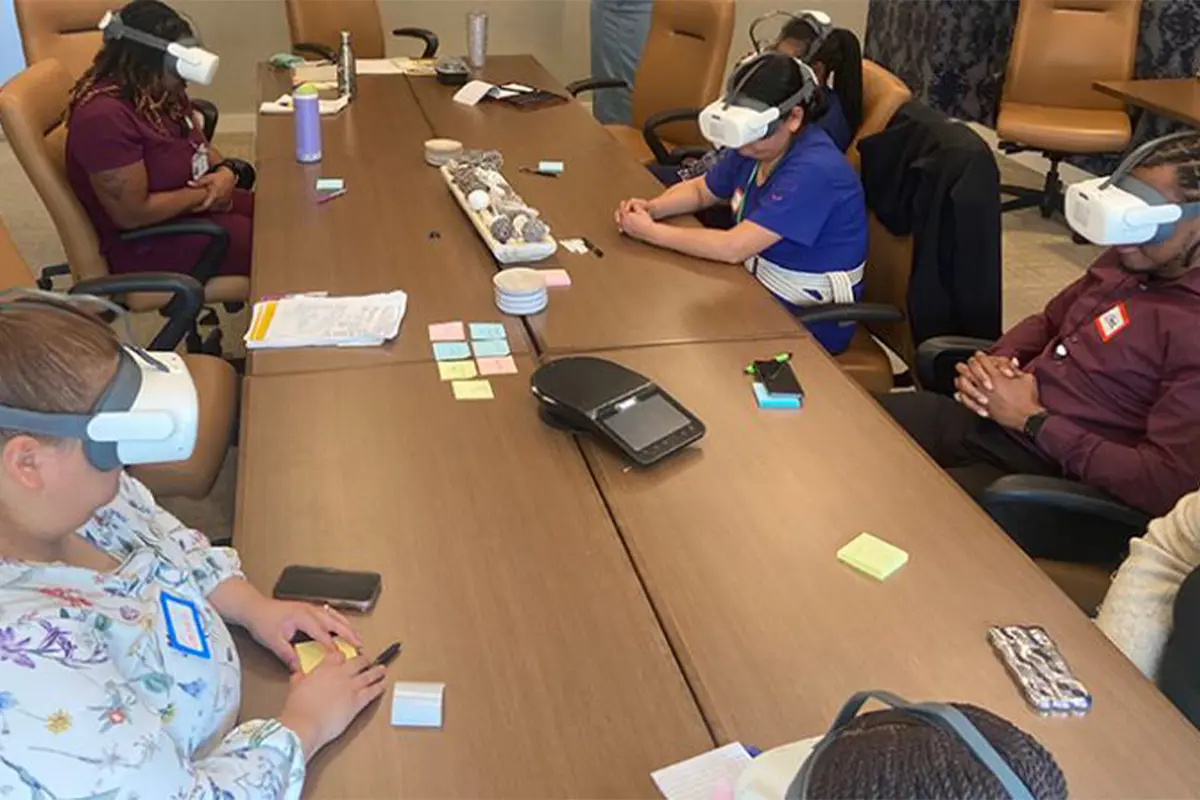
She led a four-month pilot test with about 20 CNAs at an assisted living facility in Lake Ridge, an annex of Woodbridge. For the experiment, she translated the five-minute Jolly Good VR videos from Japanese to English using AI-generated voiceovers. She chose scenarios on hallucination, paranoia. and object misrecognition — specifically, confusing a remote control and a phone. She also created an episode in which the CNAs could see an aide and patient interact.
“I wanted them to see how the interaction can be viewed from both sides,” Chen says.
She incorporated the virtual reality into a three-part training module. It involved six-minute videos on dementia and care and group discussions. To glean measurable results, Chen gave the CNAs pre- and post-tests to compare their understanding of dementia and empathy before and after their sessions.
Empathy-Based VR Training
“We cannot say there was a causal effect, but we did see a slight increase in the knowledge and also empathy numbers,” she says. “I was hoping that they would be able to understand being in the shoes of the person with Alzheimer’s or other kinds of dementia and feel empathy. I think that’s very important. More than the technical skills, I think about emotional learning here with the VR.”
For many of the CNAs, this was the first formal empathy-based dementia education they had received, she says. Although Virginia law for certifying CNAs calls for 140 hours of training, including on “care of the cognitively impaired client,” courses often focus on the basics like symptoms and behavior management.
That may be one of the reasons for the high turnover rate among CNAs nationwide, Chen says. And the national shortfall of professionals in the elder care industry. By 2031, there will be 9.3 million open positions in direct care, according to PHI, a direct-care workforce company.
“If they do receive some kind of dementia care training, it’s usually online modules or handouts,” Chen says. “There’s no real role play or visual teaching. I think VR addresses that deficit. It adds that emotional learning that is necessary.”
At the same time, the number of people in the United States with dementia is expected to increase from 7.2 million to 13.8 by 2060, according to 2025 Alzheimer’s Disease Facts and Figures. Researchers estimate that 42 percent of Americans older than 55 will develop the disease, according to the National Institutes of Health.
More VR Programs
Chen says she expects VR training to boom, especially as more companies develop solutions. For instance, Fairfax County offers Exploring Dimensions of Aging through Virtual Reality, a training series from Embodied Labs that “simulates what it’s like to be an older adult encountering various challenges in everyday situations.”
The Alzheimer’s Foundation of America sells a VR-based Dementia Experience. And Rendever, another maker of immersive technology for aging, announced a VR-based training program for senior living professionals and caregivers.
Although this experiment focused on caregiving professionals, Chen says next month she will work with informal caregivers of people with dementia and social workers. “This VR training is very flexible and can reach a huge audience,” she says.
In November, she will present the findings from the study at the American Public Health Association’s conference. But ultimately, her goal is to create VR scenes in U.S. care settings using English-speaking actors.
Feature image courtesy Li-Mei Chen/George Mason University