For the first time in history an identical twin has been convicted of a crime based on DNA evidence. The landmark case was cracked by Reston’s Parabon NanoLabs and its genetic genealogy chief, CeCe Moore.
The case in question involved Russell Marubbion, 54. He was convicted on August 21 of a 1987 sexual assault in Woodbridge. The victim, a 50-year-old cashier at a Chevron station, was abducted at knifepoint, restrained with tape, and sexually assaulted.
For 37 years the case sat unsolved — until Moore and her team tackled the thorny problem of identical twins having identical DNA.
A Breakthrough Moment
By combining cutting-edge analysis with investigative legwork from detectives in Prince William County and Florida (where Marubbion was living), Moore identified the guilty twin. The conviction marks a breakthrough moment in forensic science.
Parabon NanoLabs signed Moore in 2018 to lead its genetic genealogy unit. The unit’s work includes identifying family members, DNA phenotyping to predict physical appearance and ancestry, and “kinship inference” to determine how family members are related. That last tool, Moore explained, is what often cracks cases wide open.
Not only can she verify two people are from the same family, but she can determine which second cousin’s brother is the one they’re looking for.
Honoring Victims
For Moore, though, the work is about more than catching criminals — it’s about honoring the victims.
“Seeing the bravery of these women,” she told us in 2020, “for them to be willing to discuss [the crimes] in public and come forward without shame, I think that will be important for other victims to see and hopefully get some healing.”
The Marubbion case also matters for another reason. Identical twins are “increasingly common because of fertility treatments,” Moore said in an article by The Guardian. Having a conviction based on differentiating twins’ DNA, Moore said, is “a huge step forward” in ensuring justice in the future.
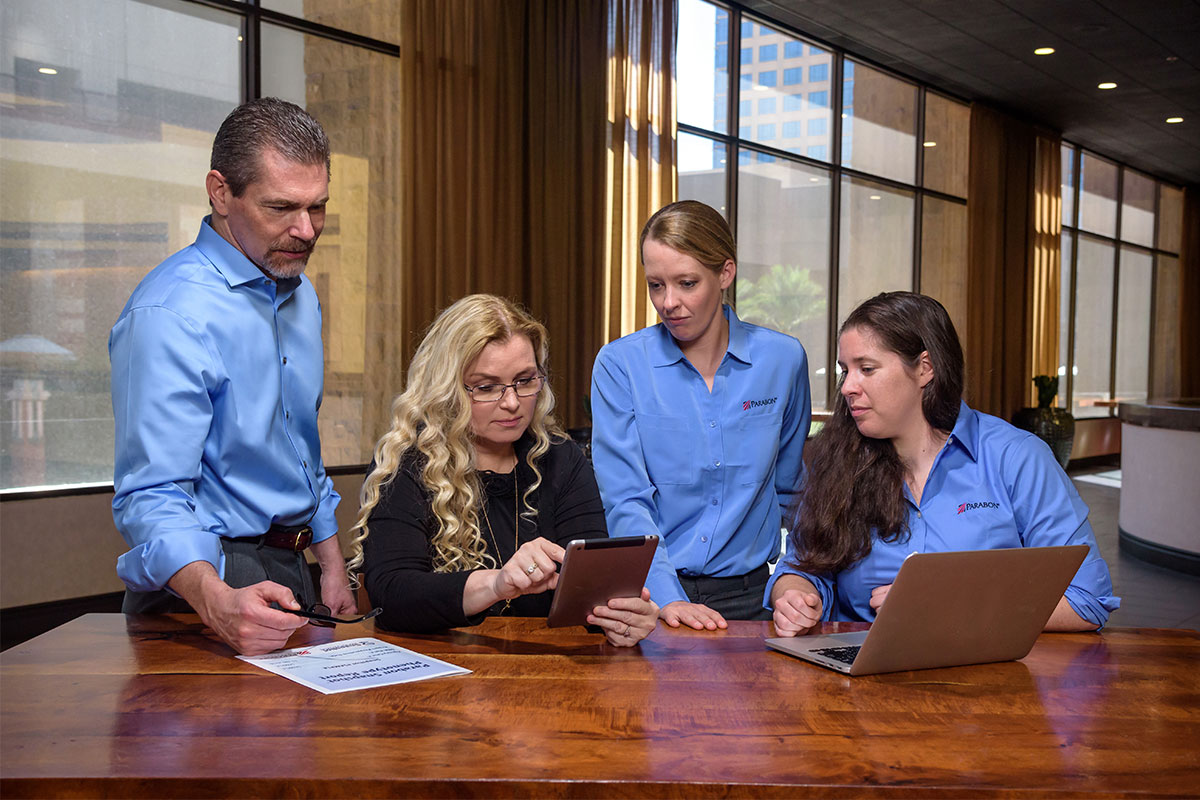
CeCe Moore and the team at Parabon NanoLabs in Reston in 2020. (Photo courtesy of Parabon NanoLabs, Inc.)