
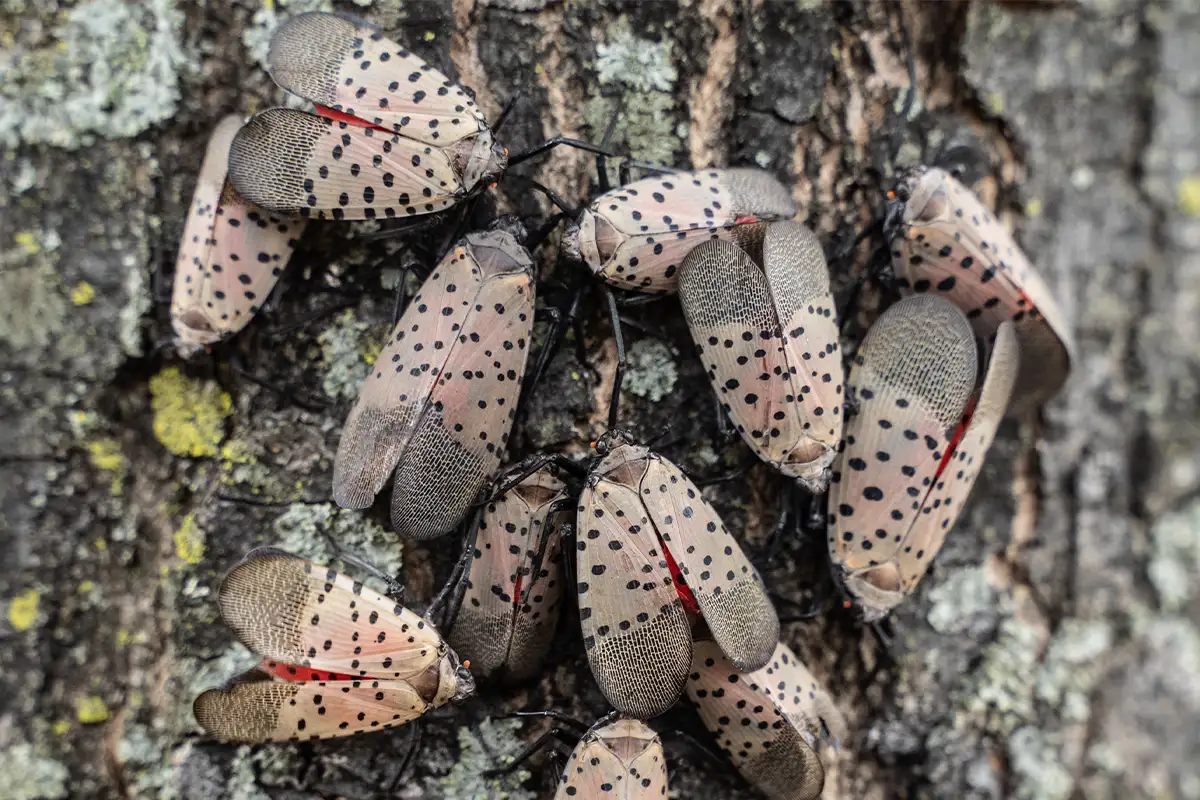
They’re back! After months of creeping around Northern Virginia lawns in their nymphal phases, many spotted lanternflies have now reached adulthood. That means you’re likely to see quite a few of the winged insects whenever you step outside.
Residents first started noticing lanternflies early this spring, when they were in their early nymphal stages. They appeared first as small, black-and-white bugs and then molted into slightly larger red ones. Now, in mid-July, many have molted into their adult phase (they don’t all mature at the same time, so you may still see some of those red nymphs, too.)
According to The Virginia Cooperative Extension, adults are most abundant in August and will begin laying eggs around September. Egg-laying continues into November, then winter temperatures typically kill any surviving adults.
And this year, the area’s lanternfly population will likely increase because of the bug’s rapid reproduction. “In general, what we’ve seen with spotted lanternfly populations, as their invasion progresses, is that you will see rapid population increases,” said Jules Amanita, the spotted lanternfly field supervisor with the Virginia Department of Agriculture and Consumer Services.
“What is also true is that in the areas that have had spotted lanternfly for a very long time, some of those have started to see populations stabilize,” Amanita said.
A Virginia Cooperative Extension agent told the Augusta Free Press that Virginia would likely see a heavy infestation for three to five years, then the population could subside, but likely will not go away.
Identification
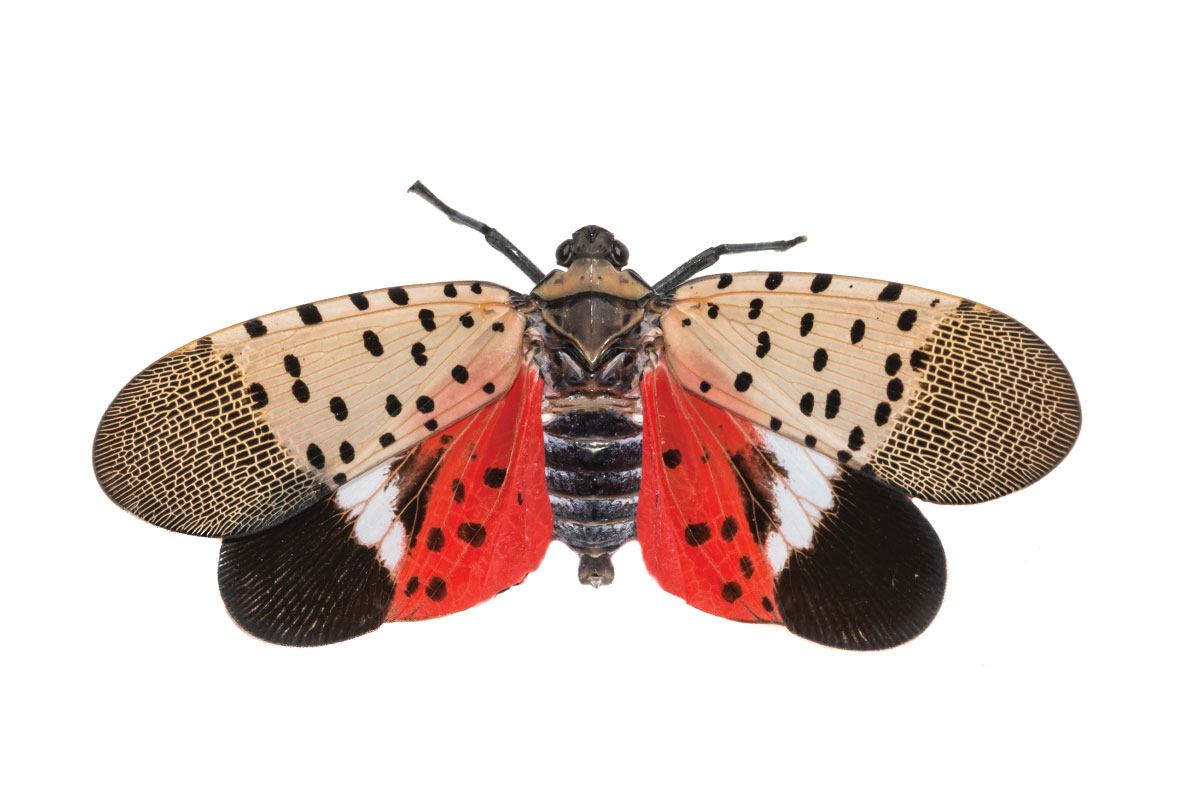
The USDA describes adult lanternflies as about 1 inch long and half an inch wide, with large wings. They have brown forewings with black spots at the front and a speckled band at the rear. Their hind wings are scarlet with black spots at the front and white and black bars at the rear.
Management
Spotted lanternflies feed on woody branches and trees, particularly the invasive Tree of Heaven, its host plant of choice. While they are not directly harmful to people or pets, they can do significant damage to agricultural crops.
To manage spotted lanternflies on your property, you can use either contact or systemic insecticides. Contact insecticides are applied directly to the insects to kill them, while systemic ones are applied to a plant so the insect dies when it feeds on the plant. With any insecticide, it’s crucial to read and adhere to label instructions to avoid environmental harm.
When lanternflies begin laying eggs, another effective way to manage them is to find and destroy egg masses. Those masses look like gray or brown mud. The USDA says to smash the egg masses you find, then scrape them into a plastic bag filled with rubbing alcohol or hand sanitizer.
Another management tactic is to identify and remove any Tree of Heaven from your property, as it is a preferred host for lanternflies. Be sure to manage it carefully — if it is simply mowed or cut down, it will resprout heavily, according to the Virginia Cooperative Extension. You can consult a local cooperative extension office or hire a professional to remove the plant.
Feature image, stock.adobe.com